NEW
Tailored feeding regimes to mitigate climate change and ensure the profitability of livestock farming
22 April 2026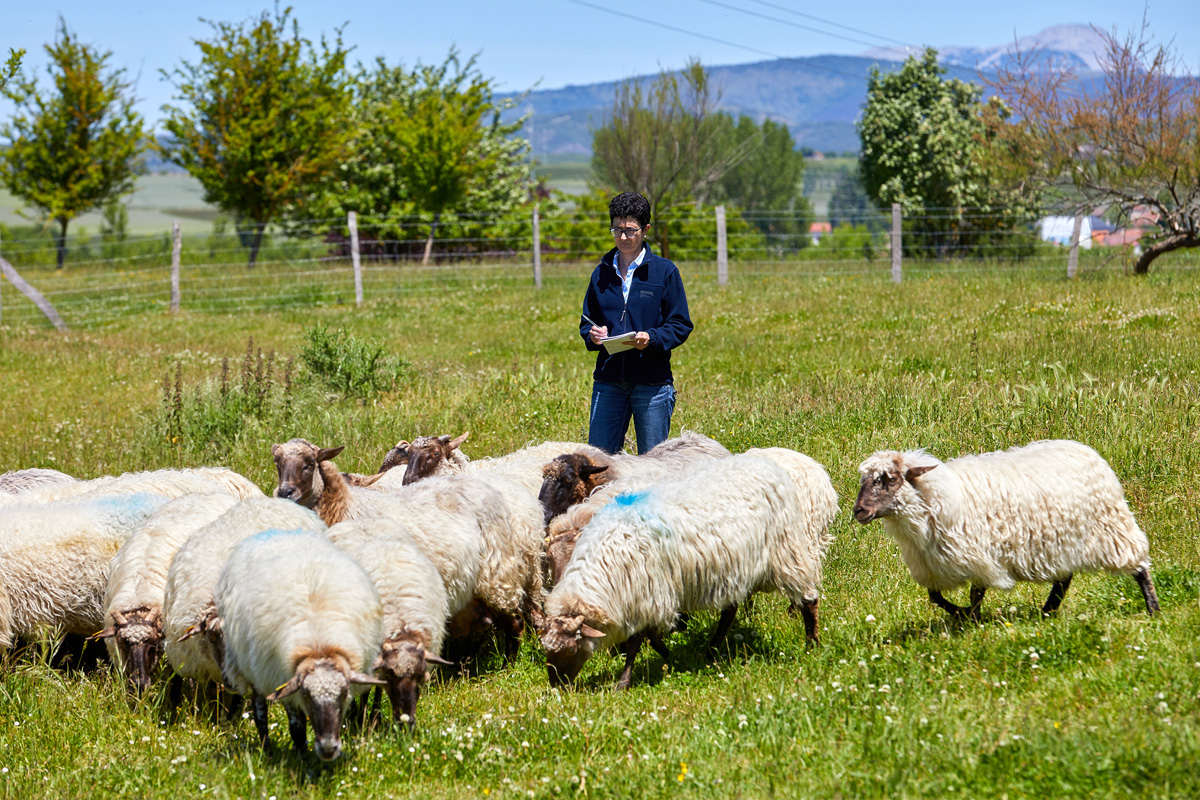
- The NEIKER technology centre is participating in the European LIFE EFACC project to develop and validate adaptation and mitigation solutions for the cattle, sheep and goat sectors
- The centre’s research focuses on developing innovative nutritional strategies to protect the health, welfare, and reproductive and productive capacity of ruminants
- To transfer the knowledge generated under the initiative to the sector, multi-stakeholder networks and digital preventive management tools such as the BOVICO2 software will be created
The increase in the frequency of heatwaves and droughts predicted in climate scenarios for the Basque Country and Europe is exposing ruminant livestock to conditions of heat stress. This environmental stress initially manifests itself through an increase in the animal’s respiratory rate to dissipate heat, a physiological response that triggers a chain of negative effects: ranging from reduced nutrient intake and weight loss to a drop in milk production and lower reproductive efficiency in both females and males.
To address this situation, the NEIKER is participating in the European LIFE EFACC project. The aim of this initiative is to identify and validate adaptation and mitigation solutions to climate change for the beef and dairy cattle, sheep (meat and dairy) and dairy goat sectors, analysing their compatibility with strategic factors such as biodiversity, sustainability, labour requirements and the economic viability of livestock farms.
In the case of NEIKER, this search for solutions has led to the development of nutritional strategies that act as an internal barrier against high temperatures.
As Ina Beltrán de Heredia, a researcher at the centre, explains, “it is necessary to adjust the diet because excessive heat disrupts the animal’s mineral balance and triggers inflammatory processes that negatively affect its digestive system”.
These multi-layered protective diets aim to stabilise the electrolyte balance and reduce the heat generated by digestive fermentation itself. By mitigating processes such as inflammation, oxidative stress and acidosis, these formulations help to compensate for energy deficits and prevent weight loss, thereby preserving the animals’ fertility and the farms’ profitability in the face of heatwaves.
Added to this is the metabolic heat generated by the fermentation process itself in the rumen of ruminants, which raises their body temperature even further. Consequently, new nutritional formulations aim to limit these processes and compensate for the energy deficit suffered by livestock when they consume less feed, thereby safeguarding their reproductive performance (fertility, prolificacy, etc.) and ensuring the farm’s economic viability.
Multi-stakeholder networks for knowledge transfer to the field
To ensure that this scientific knowledge is effectively transferred to the sector, the project relies on regional multi-stakeholder networks. These networks serve as forums where all key stakeholders in the sector—livestock farmers, researchers, academics and advisers—work together.
In the Basque Country, NEIKER is working alongside the cooperatives LURSAIL and LURGINTZA, which are responsible for selecting and engaging livestock farmers interested in assessing the impact of climate change and testing the feasibility of solutions under real-world conditions from the outset of the project.
This model ensures that the benefits are felt at two levels. On the one hand, participating livestock farmers receive direct information and immediate solutions to their problems. On the other hand, all the material produced – such as an analysis of the pros, cons and socio-economic impact of each solution evaluated – will be made available to the entire sector via a digital repository of solutions and tools.
In line with this, NEIKER will adapt digital tools such as the BOVICO2 software. This decision-support system will function as an early warning system, enabling farmers and technicians to anticipate the consequences of heatwaves. “By predicting these episodes, the software facilitates the implementation of preventive management guidelines and the adjustment of designed diets, improving the efficiency of livestock farms and ensuring their continuity in the face of climate challenges,” concludes the researcher.
About LIFE EFACC
The LIFE EFACC project comprises 39 partners from six European countries, providing a perspective based on the impact areas defined by the European Environment Agency. This international dimension enables collaborative work on best practices for adaptation at local level, utilising approaches that accommodate current and future climate variability.
The initiative, which will run until 2032, aims to propose strategies that ensure the resilience and sustainability of European livestock farming in the face of climate events through a range of solutions that facilitate training and knowledge transfer to the sector.