NEW
Alternative crops to improve profitability and soil health in the Basque Country
14 April 2026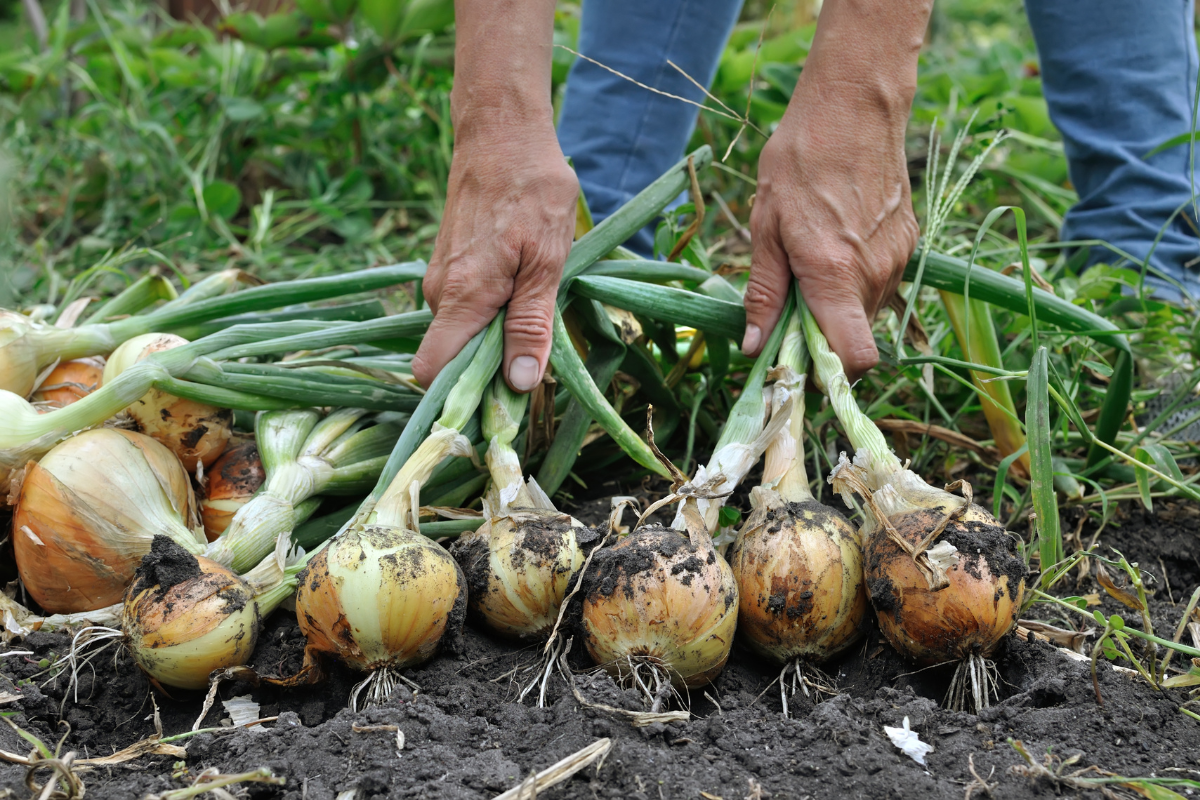
- NEIKER is assessing the feasibility of introducing fewer common species into the field to provide a commercial outlet for the sector and long-term environmental benefits
The agricultural sector is in the process of adapting to a new production model. This shift is driven by climate change, societal demands and the guidelines of the current Common Agricultural Policy (CAP), which encourages practices such as crop rotation to improve soil health and, consequently, protect the land.
With this in mind, NEIKER is investigating the potential of alternative crops – which are uncommon in the region’s traditional farming systems – to provide a commercial outlet for the sector and long-term environmental benefits. This initiative is a response to the fact that the range of crops grown in the Basque Country is very limited, and the gross margin on traditional products is shrinking due to production costs that are difficult to reduce.
“Introducing varieties such as onions or soya into standard crop rotations is a strategic decision; it allows for diversification of the crop range and, furthermore, ensures more sustainable soil, as after years of growing the same species, the land tends to become depleted and accumulate pathogens,” explains Roberto Ruíz de Arcaute, a researcher in NEIKER’s Department of Plant Production and Protection. Changing crops breaks the life cycle of these diseases, facilitating the natural recovery of soil fertility and reducing the need for chemical inputs.
The viability of the onion
As part of this diversification strategy, NEIKER has carried out research at its “La Ilarra” experimental farm, in the municipality of Gauna in Álava, focusing on analysing the technical viability of onion cultivation. The study assessed the performance of five onion varieties – Stingrain, Valero, Legend, Joaquin and Citation – to determine their management requirements in the local environment.
“This type of field trial is essential for reducing uncertainty among agricultural professionals, providing real information on the needs of each plant before they decide to grow them on a large scale,” notes the researcher.
During this monitoring, it has been established that this crop requires precise irrigation management, particularly in August, when average maximum temperatures reach around 29°C, demonstrating that, with a balanced fertilisation strategy and integrated pest management, onions are a crop that is perfectly suited to the Llanada Alavesa region.
Furthermore, the crop evaluation includes an analysis of its post-harvest behaviour, a factor that enables the sector to select the variety best suited to its logistical capabilities.
“In the post-harvest trials carried out last February, differences were observed in the storage capacity of the varieties tested. Whilst the Legend variety maintained its quality in uncooled storage conditions with a lower sprouting rate, the Valero variety showed greater sensitivity to the passage of time under the same conditions,” says Juan Bautista Relloso, a crop technician in NEIKER’s Plant Production Department.
Trials with soya and cereals
The work carried out on onions is just one example of a broader strategy, which also looks at introducing other crops. This is the case with soya, a strategic crop whose viability in the Basque Country depends on the growing season. “We have a very short window of good weather, so the challenge is to ensure that the plant completes its development quickly and that the beans are sufficiently dry by harvest time,” explains Roberto Ruiz de Arcaute.
In the case of soya, the centre is investigating critical factors such as the growing cycle, as the growing season in the Basque Country is very short. The aim is to ensure that the plant completes its development quickly so that the grain is sufficiently dry by harvest time, thereby guaranteeing the quality demanded by processing companies.
At the same time, the technology centre is conducting trials with specific bread-making cereals as an alternative to conventional wheat. The availability of distinctive raw materials, such as spelt or ancient grains, enables the sector to produce breads with special characteristics that meet current consumer demand and strengthen the brand image of bakeries.
However, for the transition to all these new alternatives to be effective, it is essential to ensure their technical viability in the field. For this reason, the centre aims to ensure that crops can be managed using the machinery that each farmer already has on their farm. The aim is not to rely on complex manual labour, but rather to ensure that these methods fit seamlessly into the mechanised routine of the farm.
Through this practical approach, NEIKER continues its work in knowledge transfer, transforming research into options that boost the viability and competitiveness of the Basque primary sector.