NEW
Gerard Badia: “The recognition of the SYVA award confirms that working in science and conducting research has real value for society”
13 May 2026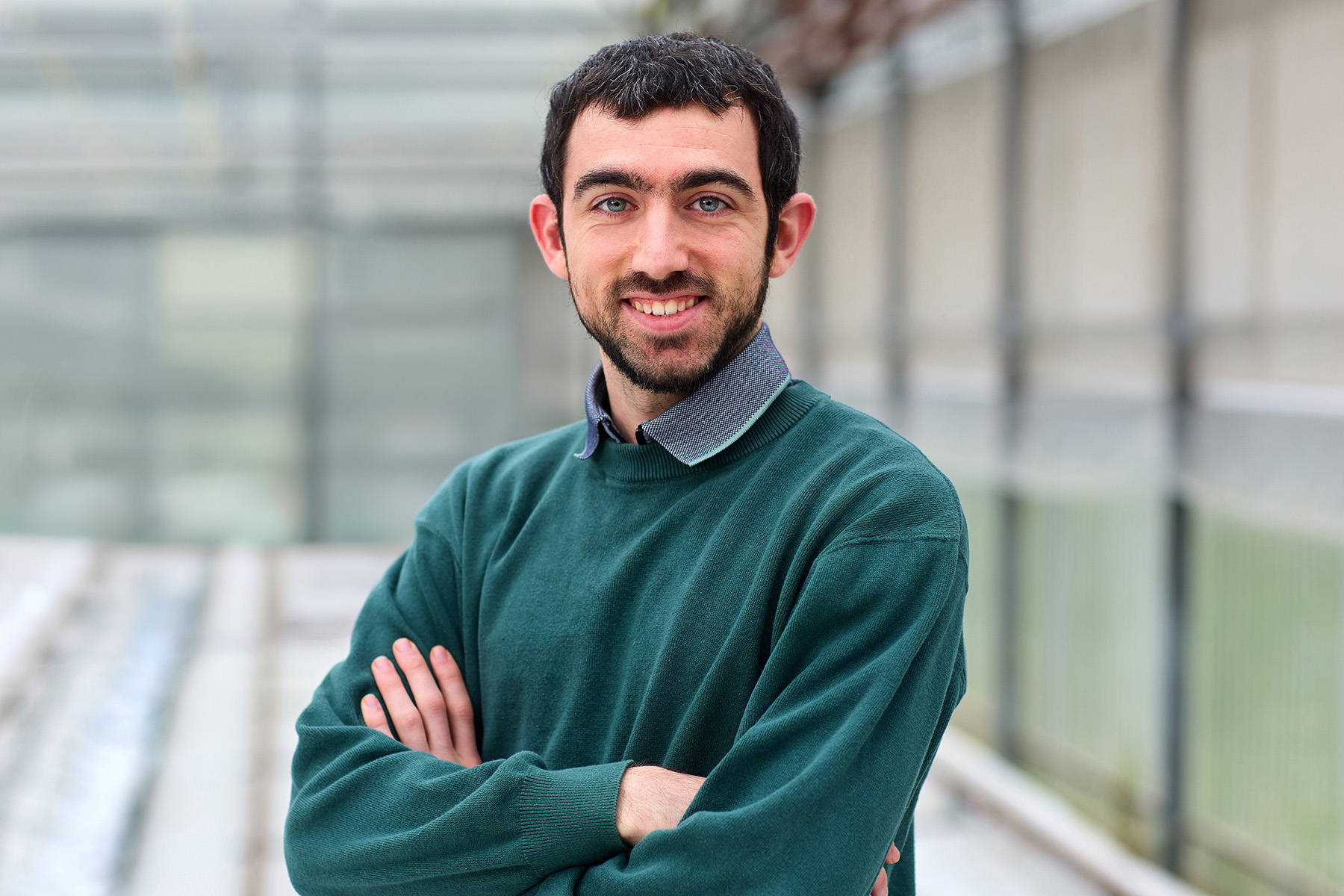
Gerard Badia Bringué, a researcher in NEIKER’s Animal Science Department, has been awarded the SYVA International Prize for the best doctoral thesis in Animal Health in 2025. This internationally recognised accolade “is the culmination of years of hard work” and recognises his research into bovine paratuberculosis, improving the early diagnosis of diseases and the search for more resilient and productive animals.
The SYVA Award is the highest honour in animal health in our region. What does it mean for a young researcher to receive this accolade?
At first, it came as a complete surprise, which quickly turned into joy and deep gratitude. For someone just starting out, this award is much more than a trophy; it is the validation of years of hard work. It represents countless hours spent processing samples in the laboratory and wrestling with bioinformatics code. Receiving this recognition confirms that working in science and dedicating oneself to research is meaningful and brings real value to society.
This achievement did not come about in isolation. How have the NEIKER ecosystem and the support of your director, Marta Alonso, contributed to this success?
This success is a shared one. NEIKER has not only provided me with state-of-the-art technological resources, but also a vision and training opportunities. Marta Alonso has been the cornerstone of this project. Her scientific insight and her ability to spot opportunities where others see only problems have been fundamental to the development of my thesis. She, together with the entire Animal Health team, has taught me what it truly means to conduct research.
Getting to the heart of your research, what would you say is the main benefit your thesis brings to society and to animal health?
The main contribution is that it paves the way for a more preventive and sustainable approach to controlling bovine paratuberculosis. Traditionally, the disease has been tackled by culling infected animals, usually only once they are showing clinical signs. My thesis proposes a control strategy more focused on early diagnosis based on digital PCR (ddPCR) technology and genetics, which has lasting effects on the population, ultimately enabling more resilient production, reducing reliance on antibiotics, extending the productive life of animals and improving animal welfare.
Furthermore, the results suggest that there are common mechanisms of animal immune competence that contribute to improving livestock immunity not only against paratuberculosis but also against other infections.
To achieve the early detection you mention, you have been working with digital PCR (ddPCR). How does this technology help livestock farmers to anticipate an ‘invisible’ disease such as paratuberculosis?
Currently, disease control is hampered by the limited ability of diagnostic methods to identify infected animals in the early stages of infection. ddPCR on blood samples is capable of detecting mycobacterial DNA even in those subclinical cases with a lower viral load. It achieves this because it does not analyse the entire sample volume at once, but divides it into thousands of smaller partitions, making it less sensitive to certain inhibitors that may be present in some samples. For the farmer, detecting the infection before it becomes clinical means saving money on treatments, preventing a drop in production and maintaining a healthy herd.
One of the most innovative aspects of your study concerns selecting animals based on their genetics and immunity. Are we close to being able to breed naturally resistant cows?
We are closer than it seems. Thanks to the data generated at NEIKER, new genomic selection tools and our understanding of the immune response, we can identify which animals are most effective at controlling the infection. In fact, we have already begun work on the GO INMUNOGEN task force project to improve genetic resistance to disease in cattle of different breeds.
This improvement in animal health and genetics also has a direct impact on consumers and the environment, doesn’t it?
Without a doubt. Selecting animals with stronger immune systems reduces reliance on antibiotics, which is vital for curbing antimicrobial resistance. Furthermore, healthy cows are more efficient, as they produce more with fewer resources, thereby reducing the environmental footprint of each litre of milk. All of this ensures safer and more sustainable dairy products.
Looking ahead, now that you’ve won this award, what are your goals?
My research interests remain in genetics and immunology. My next objective is to consolidate this line of work by integrating resistance to paratuberculosis into the genetic selection of Spanish cattle through the GO INMUNOGEN working group project. Animal health is undergoing a digital revolution; therefore, the bioinformatics techniques developed in the thesis will be crucial.
Finally, for a young person considering a career in research in this field, what makes NEIKER so special?
Much of the research we carry out at NEIKER involves visiting farms, observing the animals and talking to farmers. We work to improve animal health and genetics, thereby preventing the transmission of diseases to humans. We do all this by drawing on local resources, respecting the environment, upholding high standards of animal welfare and producing food of exceptional quality.