NEW
A standardised genetic assessment and new digital tools for dairy sheep in the Pyrenees
14 October 2026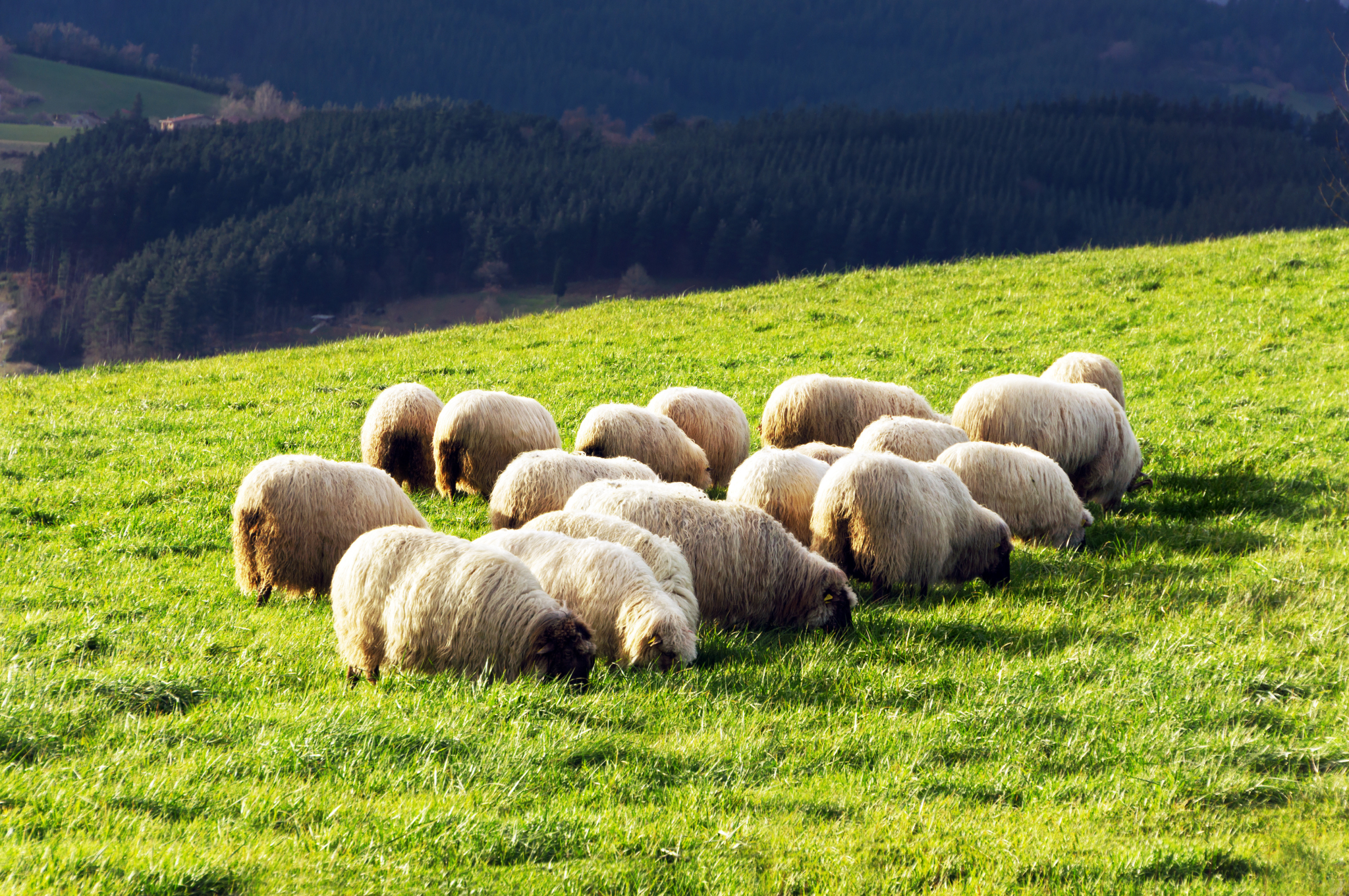
- The concluding session of the ARDI2 cross-border project highlighted the progress made in coordinating the breeding programmes for the Latxa and Manech breeds
- The initiative, which builds on the ARDI project that concluded in 2021, aims to explore the possibility of developing a joint selection programme and to consolidate the ARTALDEAN group as a platform for cooperation between France and Spain
- The initiative, co-funded by the European Interreg POCTEFA programme, provides concrete solutions in the fields of genetics, sustainability and digitalisation to support decision-making on farms
The Latxa and Manech breeds are two indigenous dairy sheep breeds from the Pyrenees, historically linked and of significant economic, social and environmental value on both sides of the border. However, the fact that they are found in two different countries, combined with the topography of the Pyrenees, has meant that their breeding programmes have developed independently and at different paces, making it difficult to exchange information and coordinate efforts in genetic improvement.
This issue was addressed this morning on the final day of the ARDI2 project, a cross-border cooperation initiative led by the NEIKER technology centre, an organisation under the Basque Government’s Department of Food, Rural Development, Agriculture and Fisheries. The project aims to make progress towards harmonising the breeding programmes for both breeds and to explore the possibility of developing a joint genetic improvement programme. During the event, the main results achieved over three years of work were presented.
ARDI2 builds on the ARDI project, carried out between 2018 and 2021, which enabled the development of tools to improve the coordination of breeding programmes and led to the creation of ARTALDEAN, a European Economic Interest Grouping comprising the organisations responsible for the programmes for the two breeds. This cross-border organisation provides a common platform for coordinating objectives and decisions, and under ARDI2, work has been carried out to expand collaboration between professionals in the livestock sector, technical staff and research centres on both sides of the Pyrenees.
Common genetic assessment
One of ARDI2’s areas of work has been the harmonisation of the criteria currently used in the Latxa and Manech breeding programmes. Although both populations share similar morphological characteristics, there are differences in the systems used to assess certain traits, such as udder morphology. To facilitate the comparison of data from both populations, these criteria have been compared and equivalences established between the methodologies used in each programme.
On this basis, progress has been made in an international genomic evaluation of the Latxa and Manech breeds for traits relating to production, milk composition and udder morphology.
“This assessment makes it possible to compare the genetic information of both populations and to estimate the animals’ productive potential more accurately. The information can help to improve the selection of breeding stock and support decision-making by the livestock sector, associations and selection centres within genetic improvement programmes,” said Itsasne Granado Tajada, a researcher at NEIKER.
New selection and sustainability criterio
Alongside the genetic and production data routinely used, the project has investigated new traits relating to the animals’ adaptation to climate change and its environmental impact. In this regard, methane emissions and heat tolerance have been analysed, with the aim of generating information that will enable an assessment of the technical feasibility of incorporating these traits into future selection schemes for the two breeds.
This expansion of the available information has also been achieved using milk samples collected during milk testing. Specifically, infrared analysis technologies have been applied to enable a detailed assessment of the milk’s precise composition, by measuring components such as caseins (proteins) and fatty acids.
“Obtaining this information is of direct practical use to the livestock sector, as it makes it easier to identify animals that produce milk with a specific compositional profile, so that they can be included in future selection and breeding programmes,” explained the researcher.
Furthermore, in order to fine-tune the performance and accuracy of this measuring tool, the data collected from Latxa sheep has been entered into a European-level reference database.
Beyond genetics, the research has extended to the analysis of farming practices on holdings. In collaboration with the LIFE Green Sheep initiative, agroecological assessments have been used to evaluate the interaction between Latxa and Manech sheep farms and the environment, gathering data that serves to reinforce the sustainable production model represented by these breeds.
Furthermore, the specific situation of sheep farms operating under the organic production model has been studied. This type of livestock farming must comply with specific regulations, such as the ban on the use of hormonal treatments, which makes the use of artificial insemination difficult. The project has analysed this scenario with the aim of offering alternatives that will enable these farms to overcome these barriers and participate in genetic improvement programmes.
New tools for livestock management
The generation of all this new information on genetics, productivity and sustainability has been accompanied by the development of IT tools that facilitate its practical management in day-to-day farm operations. The project thus aims to incorporate technological innovation as a strategic element to assist the sector in decision-making and, in turn, to promote generational renewal.
In the case of the Latxa breed, a web-based computer programme has been developed which centralises each animal’s records and provides herd management reports. This tool, known as LatxApp, allows farmers to access information in real time in a user-friendly way.
As for the Manech breed, work has focused on developing a management software programme directly linked to milking parlours equipped with individual electronic metering systems. In this way, milk production data collected via certified meters is automatically incorporated into the farm’s management system and the breeding programme itself.
The work carried out during ARDI2 has helped to strengthen collaboration between the organisations involved in the breeding programmes for both populations and to facilitate the exchange of information between livestock farmers, technical experts and research centres on both sides of the Pyrenees.
On the Latxa side, the project involves the Navarre Livestock Breeders’ Association (ASLANA), the ARDIEKIN artificial insemination centre and NEIKER. On behalf of the Manech breed, the project involves CDEO, which is responsible for the breed’s breeding programme, and the research centres IDELE and INRAE. ARDI2 is co-funded by the European Union through the Interreg POCTEFA programme (EFA032/01).