NEW
NEIKER’s scientific excellence is once again reflected in the Stanford ranking, with three researchers featured
23 October 2026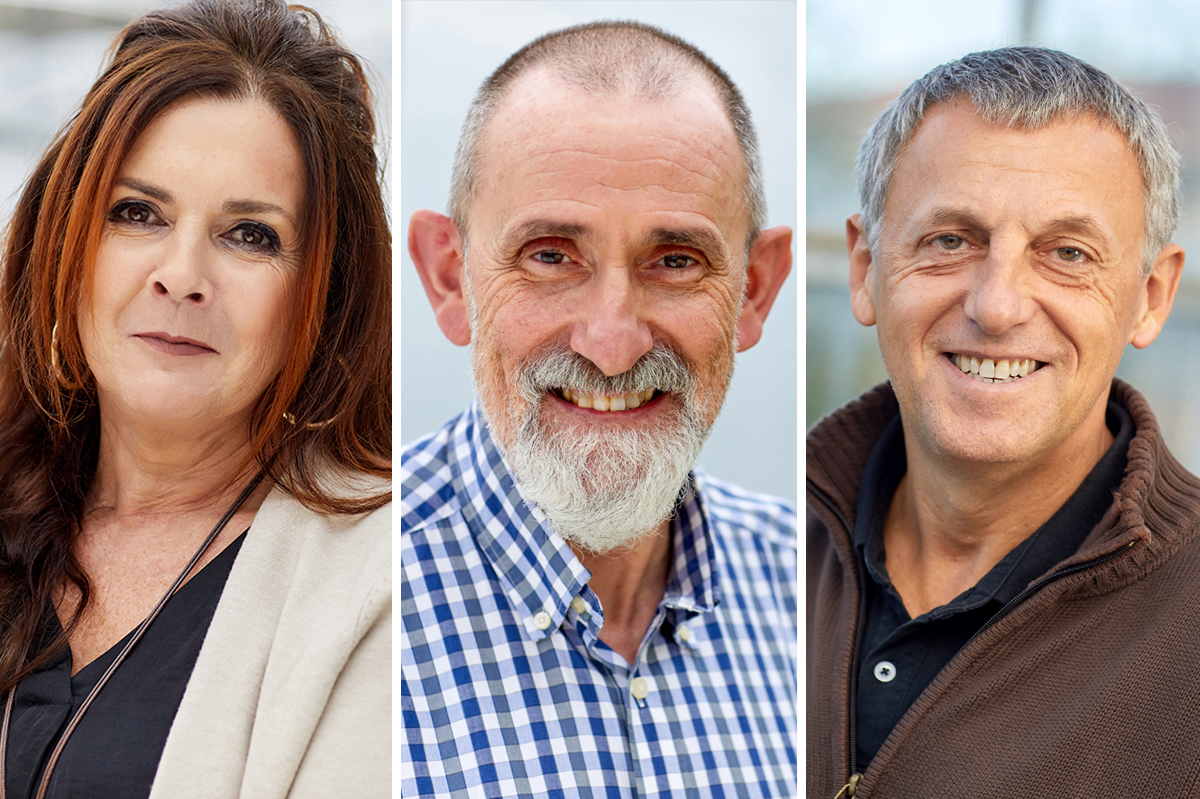
- They are Carlos Garbisu, a specialist in environmental microbiology and scientific director of NEIKER; Inma Estévez, a renowned scientist in applied ethology and animal welfare and an Ikerbasque researcher; and Ramón Juste, an expert in animal health
- They are ranked amongst the top 1.5 per cent worldwide in their respective fields and have been included in the Stanford ranking once again
- They are three of the 189 researchers from Basque centres featured in the ranking, which is a remarkable achievement given the small number of researchers at NEIKER compared with other organisations in the Basque Country
Stanford University has recently updated its list of the world’s most influential researchers, based on citations of their scientific publications on the Scopus portal. Once again this year, the prestigious American university has included on this list Dr Carlos Garbisu, scientific director of NEIKER; Dr Inma Estévez, a researcher in NEIKER’s Department of Animal Science and an Ikerbasque senior researcher; and Dr Ramón Juste, a researcher in the Department of Animal Science.
The world’s most cited researchers feature on this list, which is a tremendous honour for those included. In fact, this ranking is currently regarded as the most prestigious international scientific reference document for assessing the impact of the work carried out by scientists.
The three NEIKER researchers work in different areas of specialisation: animal health, animal behaviour and welfare, and environmental microbiology and soil health. This diversity reflects the breadth of NEIKER’s research areas and its contribution to advancing knowledge in strategic areas for the primary sector and its sustainability.
This recognition highlights NEIKER’s scientific excellence as a whole. The fact that three of its researchers feature amongst the 189 scientists from Basque centres included in the Stanford ranking takes on even greater significance when one considers the centre’s small number of researchers compared with other institutions and technology centres in the Basque Country featured in the ranking.
NEIKER, an organisation under the Basque Government’s Department of Food, Rural Development, Agriculture and Fisheries, combines research with the provision of technological services and technology transfer to the Basque primary sector, adding value and improving its competitiveness, particularly in the areas of animal production and animal health, where it is the sole centre of excellence in the Basque Country.
Notable career paths
Dr Inma Estévez, a researcher in NEIKER’s Department of Animal Science and an Ikerbasque senior researcher—who has been included on the list for the fifth consecutive time—holds a Bachelor’s degree in Zoology and a PhD in Ethology (animal behaviour) from the University of Córdoba. Throughout her long professional career, she has worked as a researcher at Agriculture Canada, the Swedish University of Agricultural Sciences, INRA (France) and the University of Maryland (USA), where she attained the rank of Full Professor. In 2008, she joined NEIKER’s staff as an IKERBASQUE senior researcher. Highlights of her career include awards such as the ‘Junior Faculty Award’ (University of Maryland), the Hy-Line International Research Award and the Poultry Science Association’s Research Award for the Welfare of Production Poultry, as well as having served on the Basque Government’s Scientific Advisory Committee and on various expert panels within international bodies such as EFSA and the World Organisation for Animal Health.
He has led numerous competitive research projects in both the USA and Europe, always focusing on aspects of the behaviour and welfare of farm birds. Her research has always been conducted from a fundamental perspective of behavioural ecology, with particular emphasis on her work in social dynamics, whilst easily integrating its applications into the production and technological spheres – as reflected, for example, in the development of the world’s first app designed for the quantitative assessment of broiler chicken welfare. Inma has played a key role in NEIKER’s involvement in the Welfair® certification scheme, the only animal welfare label based on scientific evidence.
His research currently focuses on exploring the biological and social factors that influence the behaviour of poultry. To this end, he utilises new technologies, applications and working methodologies that help to improve the welfare of the birds and the sector’s production efficiency.
“Research into animal behaviour is a cornerstone of the sustainability of production systems. Understanding the relationship between animals and the environment in which they live enables us to adapt production systems in line with their behavioural biology, reduce stressors and improve their health holistically from a One Health perspective. Only by understanding their behaviour and the factors that contribute to animal welfare is it possible to combine ethically responsible development with the production efficiency that farmers – and we as consumers – need,” emphasises Dr Estévez in relation to her work.
For his part, Dr Ramón Juste, a researcher in NEIKER’s Department of Animal Science, who has been included in the aforementioned Stanford ranking since its inception – for the eighth consecutive year – has focused his scientific work on animal health.
He has worked at the Tierärztliche Hochschule in Germany, the University of Nebraska and Texas A&M University in the USA; he has served as Scientific Director for Agricultural Innovation at NEIKER and as Managing Director of SERIDA in Asturias; and he has received the ‘Isabel Mínguez Tudela’ awards from Vet+i, the ‘Isabel Zendal’ award from the Zendal Group and Animal Health Research, as well as the first ‘Bizkaia Veterinary Profession Honour Award’.
Juste has supervised 13 doctoral theses and published more than 250 scientific articles. His main scientific contributions focus on the study of mycobacteriosis; he has developed the first mathematical model of the epidemiological and economic effectiveness of paratuberculosis control, contributed to the detection of the first case of H5N1 avian influenza in Spain, and demonstrated for the first time in cattle the concept of specific and non-specific protection based on trained immunity.
“Ensuring animal health not only improves their welfare, but also helps to guarantee the quality, safety and availability of food and other products for the population. Among these, the effect of natural ‘animalisation’ or cross-immunostimulation against related human pathogens constitutes a little-known but essential ecosystem service provided by livestock farming. In this context, immunomodulation is emerging as a promising tool for strengthening animals’ natural defences, promoting their resilience to disease and reducing the use of antibiotics. Furthermore, research into this area provides a better understanding of the mechanisms of health and disease shared between animals and humans, in line with the ‘One Health’ approach. Currently, research into immunomodulation through trials on ruminants, in collaboration with other research centres, is opening up new avenues for the prevention and treatment of various diseases”, explains Dr Juste.
Finally, Dr Carlos Garbisu, scientific director of NEIKER, with a Hirsch index of over 60 and more than 11,200 citations in the Scopus database, has also been included in the Stanford ranking for the eighth consecutive year – that is, since the first year the ranking was published. In addition to NEIKER and the University of the Basque Country, his professional career as a researcher includes the University of Aberdeen (Scotland), Imperial College London (United Kingdom), King’s College London (United Kingdom) – where he completed his PhD – and the University of California, Berkeley, where he undertook postdoctoral research.
In 2018, he was recognised by the Basque Government for his research work and scientific and technological achievements throughout his professional career. He has supervised 12 doctoral theses, is accredited by UNIBASQ as a Research Professor, and is listed as an expert with the United Nations Harmony with Nature Network.
Dr Garbisu, until recently scientific director of NEIKER, is renowned for his contributions to our understanding of the microorganisms that inhabit soils, with a particular focus on agricultural soils and contaminated soils.
“Healthy soils are the foundation of sustainable agriculture. Preserving and restoring soil health through farming practices that respect biodiversity and the ecological integrity of the soil not only helps to maintain agricultural productivity in the long term, but also increases the resilience of agroecosystems to climate change, reduces dependence on external inputs and helps to protect the environment. “We must produce healthy, high-quality food whilst respecting the planet’s ecological limits, preserving biodiversity and natural resources, strengthening rural communities and ensuring decent living and working conditions for all those who make agricultural production possible,” says Dr Garbisu.