NEW
Roberto Ruiz: “Our R&D impact must be measured in real returns for the sector and region, not just ‘papers’”
4 September 2026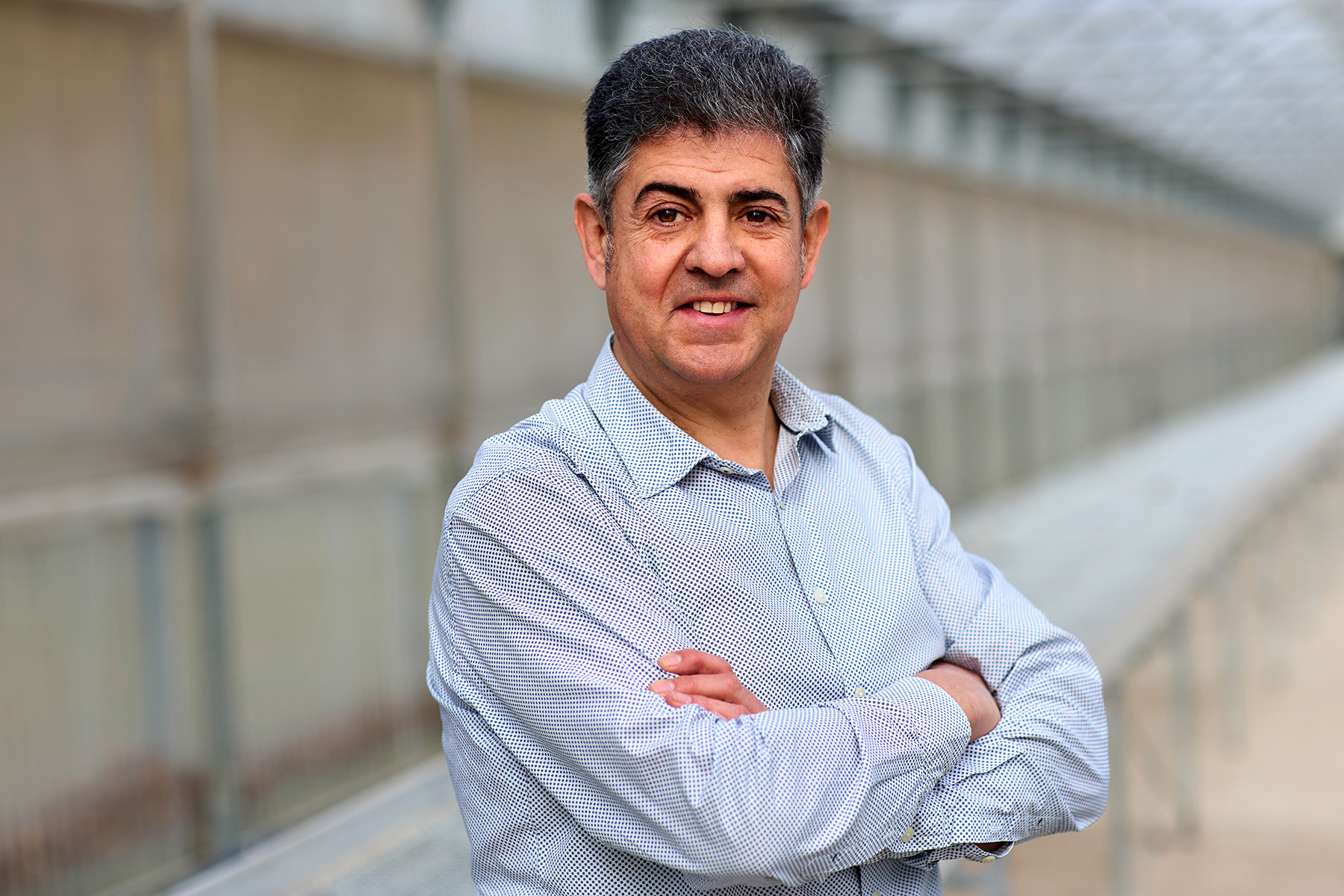
Having previously headed the Animal Production department, Roberto Ruiz has taken over as Head of Territorial Impact at NEIKER. With this new strategic division, the technology centre aims to accelerate the transfer of science and technology to the agricultural, livestock and forestry sectors, ensuring that research translates into profitable, sustainable solutions that have a real impact.
Having previously headed up the Animal Production department, you are now taking over as head of Territorial Impact. What does this concept entail?
It is clear that the sector is going through a very difficult period and faces significant challenges, such as the lack of a new generation of professionals and climate change, amongst others, which require urgent action. In this context, the rapid and effective transfer of the knowledge we generate takes on fundamental importance.
At the same time, society is increasingly demanding proof of the real impact of the money invested in R&D – in our case, on the sector and the region. For this reason, the concept of impact goes beyond the number of ‘papers’ published or participation in conferences, and focuses on the returns we generate in technical, economic, environmental and social terms.
We are talking about how we help to make agricultural production units – or ‘baserris’ – more competitive, to create jobs and to conserve the ecosystems of the Basque Country.
One of your main tasks will be to strengthen knowledge transfer. How can we ensure that research translates into real solutions for the sector?
When the idea of setting up the Technology Transfer unit at NEIKER was first mooted, the aim was to put the centre’s capabilities at the service of businesses and, to a large extent, to increase contract-based funding. In this regard, significant work has been done and continues to be carried out, including in identifying the sector’s needs.
With this new structure, the aim is to strengthen this work, because knowledge transfer should not be seen as the final stage of research, but rather as something that must be present from the very beginning. It is essential to involve stakeholders in the sector – such as producers, advisers, cooperatives, industry and public authorities – to identify their needs and, on that basis, guide the projects.
In this regard, our research can only have an impact if it addresses real problems and if the solutions are applicable, cost-effective and feasible in day-to-day practice. This involves developing useful tools, new management practices, accessible technologies and also training activities.
Furthermore, it is essential to bring knowledge to the field through demonstration and validation initiatives, such as pilot farms, collaborative projects or trials under real-world conditions. In this regard, NEIKER’s strategy is underpinned by the BERRITZEN plan, which is structured around three pillars: IDEIAK, focused on identifying the sector’s needs; PRAKTIKAK, geared towards implementing solutions under real-world conditions; and GUNEAK, centred on long-term trials on its own premises. All of this requires maintaining a constant and fluid relationship with the sector, because knowledge transfer only works if it is designed collaboratively from the outset.
Measuring scientific impact is no longer just a matter of counting scientific articles. How is the real return on research assessed?
Measuring the impact of our R&D means taking a broader view. It is not just a matter of counting publications – important though they are – but of understanding what changes as a result of the knowledge we generate, and for whom.
For example, a climate-resilient potato variety can reduce the cost of plant protection products or improve a farm’s net profit margin. In the case of a new technology, the return translates into fewer working hours. Generally speaking, the impact is reflected in improvements in productivity, cost reductions, the generation of economic activity, employment or environmental indicators.
In this regard, the challenge lies in obtaining accurate information about the sector, which requires closer engagement with stakeholders. Furthermore, there are impacts that are not always immediate and which require other forms of assessment, such as improvements in public decision-making, the strengthening of the sector’s fabric, the enhancement of professional skills, or greater resilience in production systems.
With climate change and the digital transformation already underway, what are the most pressing priorities for the Basque agriculture, livestock and forestry sector?
Climate change is already having visible effects, such as more intense heatwaves and reduced rainfall, which is forcing farmers to adapt their crop management, sowing dates, irrigation and livestock facilities to reduce heat stress.
At the same time, progress must be made in developing more resilient varieties, improving animal feed and managing production systems, whilst genetic improvement programmes are already identifying more tolerant individuals, albeit with results that will take time to materialise.
In the field of digitalisation, the priority is to incorporate validated sensors that enable the monitoring of crops and livestock and generate high-quality data, on the basis of which artificial intelligence can facilitate decision-making through tools such as early-warning systems.
All of this should help to improve the sector’s efficiency, competitiveness and sustainability, alongside an urgent structural challenge: ensuring generational succession and the economic viability of agricultural, livestock and forestry production units, as without profitability or attractive conditions, any progress will have a limited impact.
For innovation to work, your management team will seek to develop strategic partnerships. Why is it impossible to view modern scientific research in isolation?
Research in the primary sector cannot be approached in isolation because the challenges are far too complex. Climate change, sustainability and digitalisation require shared knowledge and complementary capabilities.
Partnerships with businesses, co-operatives, associations, public authorities and other centres enable projects to be better aligned with real-world needs, accelerate knowledge transfer and validate solutions in real-world settings. Furthermore, they help to build trust and multiply the impact.
European networks, for their part, enable us to anticipate trends and access cutting-edge knowledge, but it is equally important to maintain local roots to ensure that innovation responds to the needs of the region.
Looking ahead, what are the main challenges in consolidating this new direction?
In the short term, the aim is to consolidate the working team alongside the Technology Transfer and Bioeconomy departments, strengthening internal coordination. A special effort is also being made in the wine sector, where NEIKER has experience and a strong reputation, and where we are already working in partnership with EDA Drinks & Wine Campus.
In the medium and long term, the challenge is to establish a structured, measurable technology transfer strategy that is closely aligned with the sector. This involves strengthening links with cooperatives, industry and public authorities to steer research towards solutions that make a real difference.
Another key challenge is to move towards a culture of impact assessment, not only in terms of research activity, but also in terms of real economic, environmental and social transformation within the region. At the same time, we must continue to strengthen both local and European partnerships.
On a personal level, what motivates you to take on this new challenge at NEIKER?
I am particularly motivated by the cross-cutting nature of this challenge and the opportunity to broaden the framework so that knowledge reaches the sector with a more direct impact on the region. There is a great opportunity to strengthen the link between research and its beneficiaries, from producers to all stakeholders in the sector and the general public.
It is also an exciting challenge because it allows me to work in a more cross-cutting way, connecting different teams, projects and stakeholders, and to see how that work translates into concrete improvements in the day-to-day running of the agriculture, livestock and forestry sectors in the Basque Country.