NEW
NEIKER presents in Alava innovations in potato cultivation and in the experimental use of drones
2 September 2026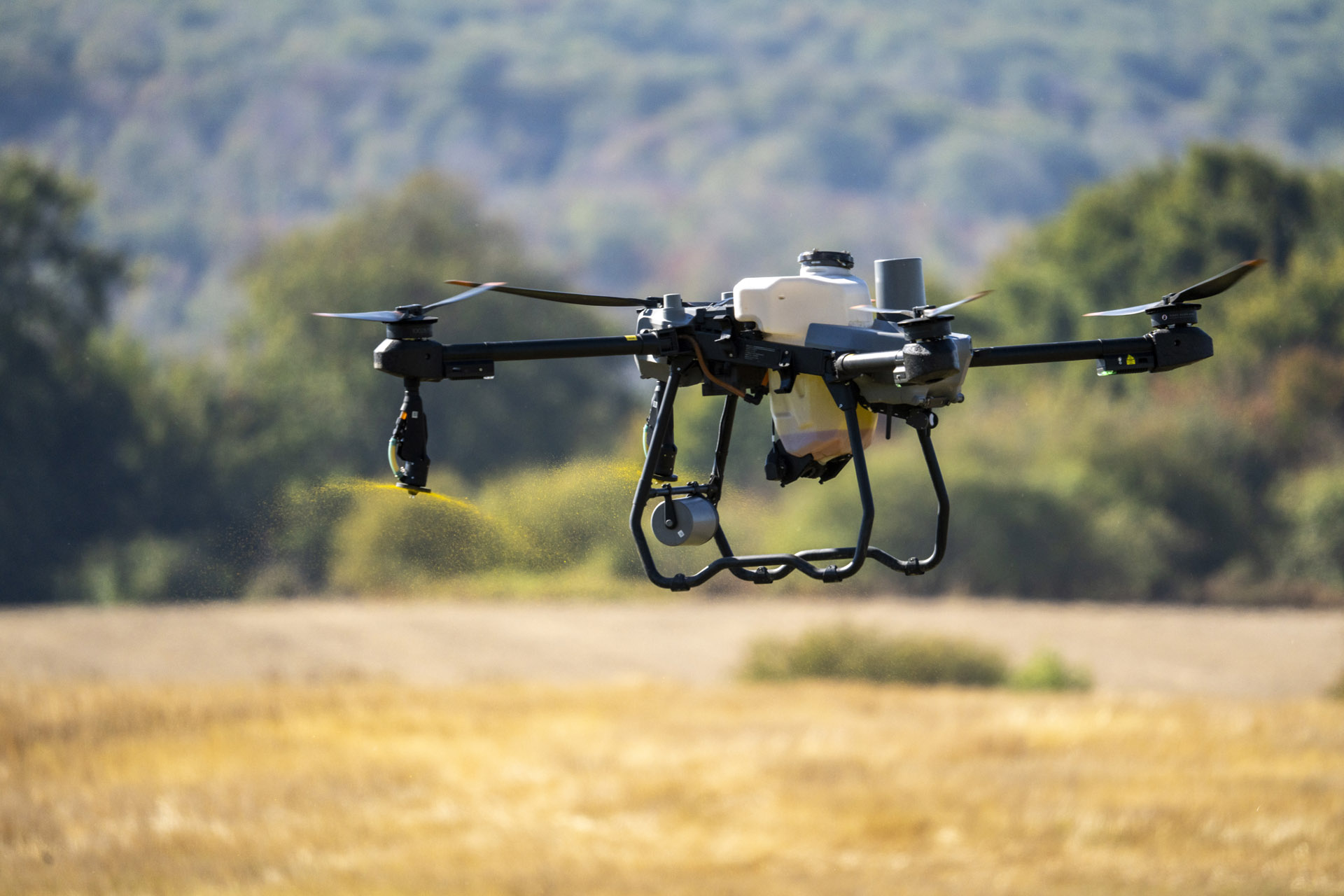
- Iturrieta farm, focusing on plant health, biostimulants, fertilisation and haulm drying
- The event formed part of the Potato Sector Plan promoted by the Basque Government to address the challenges facing the sector
- In collaboration with UAGA, the event included an experimental drone flight demonstration to study their use in the application of plant protection treatments
Potato cultivation is influenced by the presence of pests and diseases, as well as by factors relating to nutrition and resource management.
To analyse these issues under real-world conditions, the NEIKER technology centre – an organisation under the Basque Government’s Department of Food, Rural Development, Agriculture and Fisheries – brought together representatives from the agricultural sector this morning at its Iturrieta farm (Álava) to present its latest agronomic research and assess the potential of new technological tools in the cultivation of seed potatoes.
The research presented during the event is being carried out at an altitude of 1,000 metres and forms part of the action lines set out in the Sectoral Plan for table and seed potatoes in the Basque Country. Through these trials, the organisation aims to generate transferable scientific knowledge that will enable the sector to anticipate different climate scenarios and adopt technological tools that have been previously evaluated under real-world conditions.
Plant health and predictive models
During the visit to the trial fields, NEIKER outlined the research lines aimed at tackling the main health threats to the crop. Of particular note is the study into the transmission of potato virus Y (PVY), which can be transmitted by insects and affect seed potatoes. To reduce its transmission, the effectiveness of repellents and bio-based products is being assessed.
Strategies developed to control the wireworm have also been presented. “Its larvae can bore holes in potatoes, so we are comparing different control strategies and analysing their effect by monitoring these organisms and the damage observed on the tubers,” explains Amaia Ortiz, head of NEIKER’s Department of Plant Production and Protection.
To reduce the impact of serious fungal diseases such as late blight and Alternaria, the centre combines direct observation of the plants with the use of predictive weather models. This system allows the application of treatments to be tailored to periods of actual risk, avoiding unnecessary preventative interventions and enabling more precise protection of the field.
Nutrition and desiccation
Beyond plant health, agronomic management requires strategies that strengthen the crop’s biological cycle. In this regard, trials at Iturrieta are assessing the application of biostimulants to analyse their effect on plant development, overall yield and the evolution of soil microbiota, which is essential for maintaining long-term soil fertility.
At the same time, for the Agria and Edurne potato varieties, different nitrogen application rates and timings are being compared with the aim of optimising the utilisation of this nutrient and reducing its losses to the environment.
The research also covers the final stage of the crop cycle by studying different methods of plant desiccation. “In seed potato production, this process allows vegetative growth to be halted at the right time and the harvest to be prepared, enabling us to assess the impact of each technique on the final size and health of the tuber,” says Ortiz.
Experimental evaluation of drone use
The second part of the technical seminar was devoted to the DRONSafe project, in which NEIKER and UAGA are participating, and consisted of a practical demonstration of drone flights.
These trials, which are experimental in nature as current regulations do not permit the use of drones for the application of plant protection products, focus on assessing the dispersion of the products outside the treated areas, their efficiency and other implications associated with this type of application. The incorporation of precision technologies such as these aims to help improve safety, reduce exposure during treatments and move towards more efficient and sustainable agriculture.
Among the aspects being analysed are drift – the unintended movement of sprayed droplets outside the target area – as well as the exposure of operating personnel and the environment during the various stages of treatment.
“This information will be essential for the final authorisation of this application system in the future,” explains Edurne Basterra, president of UAGA, “as it will enable the development of a methodology to assess its potential effects on people and the environment and will help to determine the conditions under which this type of application could be carried out.”
DRONsafe project is coordinated by the Business Association for Plant Protection, with the National Agri-Food Technology Centre, the State Agency for the Higher Council for Scientific Research – National Institute for Agricultural and Food Research and Technology, the Valencian Farmers’ Association, the Álava Agricultural and Livestock Union, the Cuatro Rayas Winery Agri-Food Cooperative and Field Trials Services, S.L. In addition, technical services are subcontracted from NEIKER, the University of Seville Research Foundation and the Valencian Institute of Agricultural Research.
Further information: https://observatorioagroalimentario.com/proyectos/GOS/dronsafe/