NEW
Pollinators and ground cover as allies in promoting the sustainability of apple orchards
2 June 2026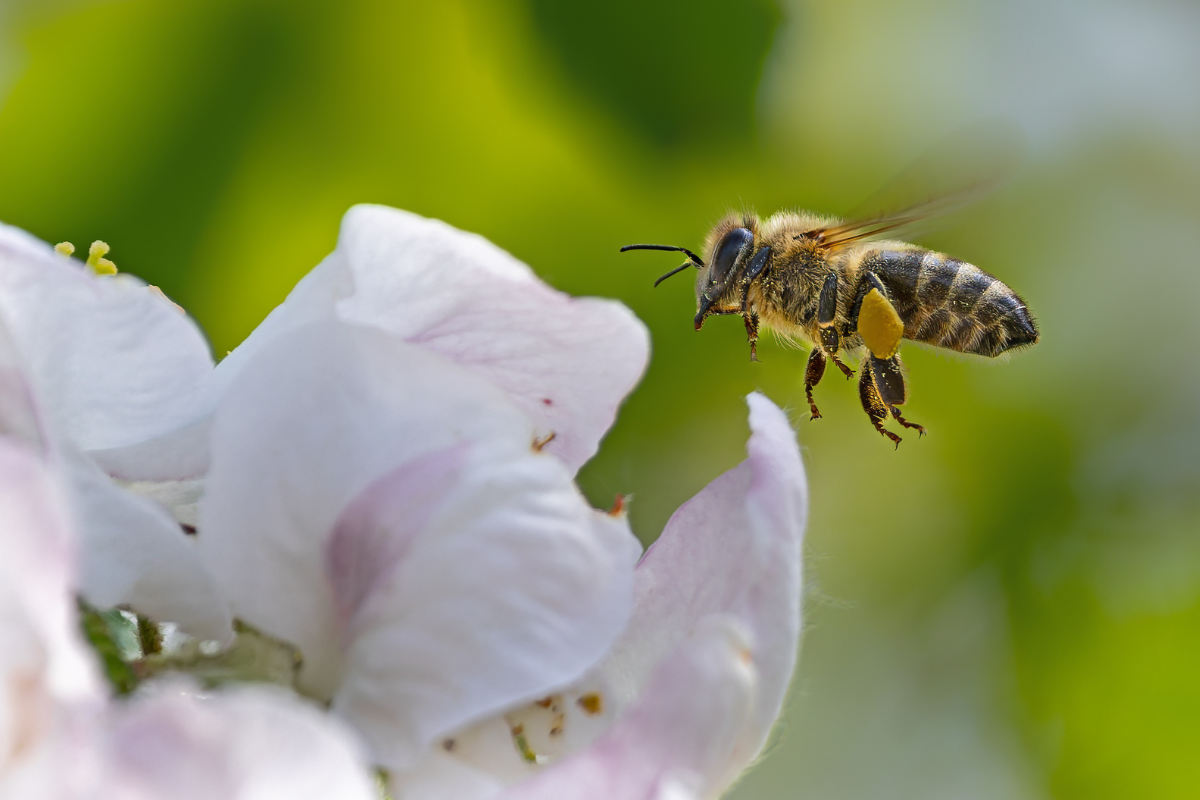
- NEIKER is conducting a trial at the Otalarrea experimental farm (Gipuzkoa) to analyse the role of biodiversity in apple cultivation management through changes in agronomic practices
Producing more efficiently and sustainably is the guiding principle currently driving the agricultural sector, which seeks to integrate environmental protection as a competitive factor capable of ensuring the long-term profitability of farms. In this context, biodiversity is emerging as an essential tool for moving towards more resilient production models.
With this aim in mind, the NEIKER technology centre is leading the European POLITA project, within the framework of which a trial is being conducted on the provincial-owned Otalarrea farm (Villabona, Gipuzkoa). This initiative, which is being carried out in collaboration with the Provincial Council of Gipuzkoa and with the support of FRUITEL, aims to demonstrate that the interaction between plants and arthropods — known as functional biodiversity — enables more productive and resilient apple crops.
To this end, it focuses on introducing changes to standard crop management practices to promote ecosystem balance. One of the most significant changes is the reduction in the frequency of mowing, from the usual five times a year to just two. The aim of this measure is to encourage the development of more diverse and complex vegetation cover that provides shelter and food for beneficial arthropods.
This commitment to promoting agroecological practices allows the area’s native vegetation to reclaim its space, avoiding the need to sow external species. “Unlike strategies based on sowing commercial seeds, through this trial we are focusing on the land’s natural flora, as native plants are adapted to the local climate and synchronised with the cycles of the area’s pollinators, which reduces costs and improves the sustainability of the orchard,” explains Isabel Albizu, a researcher at NEIKER.
Benefits for the crop and the fruit
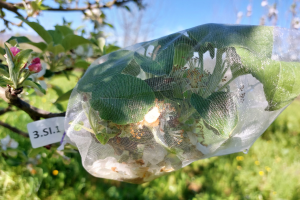
The development of these more diverse natural canopies has a direct impact on the functional biodiversity of the orchard. On the one hand, it increases the presence of pollinators such as wild bees and other insects, whose activity improves fruit set, size and quality. On the other hand, it benefits auxiliary fauna, consisting of natural predators that contribute to biological pest control, reducing the need for plant protection treatments and promoting more sustainable crop management.
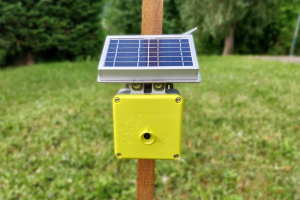
The project is also testing the use of bioacoustic sensors, a technology that allows insect activity to be monitored non-invasively, without altering their natural behaviour. This tool complements traditional sampling methods and provides a more accurate picture of ecosystem dynamics.
In addition to the direct effects on the crop, the study incorporates an innovative line of research focusing on the role of pollinators as vectors of beneficial microbiota. “As they move between plants and fruit, these organisms can transfer yeasts and bacteria that colonise the surface of apples and play a part in fermentation processes,” notes Albizu.
This phenomenon is particularly relevant in cider production, as this natural microbiota could influence the aromatic profile, sensory complexity and typical characteristics of the final product, opening up new avenues of research into fruit quality.
A more cost-effective and transferable model
Beyond its environmental impact, this management model also offers economic benefits for the sector. Reducing the need for mechanical labour lowers the costs associated with the use of machinery, whilst strengthening natural biological control can help reduce dependence on external inputs.
The work carried out at the Otalarrea experimental farm is in line with NEIKER’s objective of generating applied scientific knowledge that enables the validation of new strategies based on functional biodiversity and facilitates their transfer to professional farmers. In the long term, this line of research aims to contribute to the development of agricultural systems that are more sustainable, competitive and adapted to the challenges of climate change.