NEW
NEIKER hosts the 5th AKIS Forum to present the new strategic plan for the potato sector
5 March 2026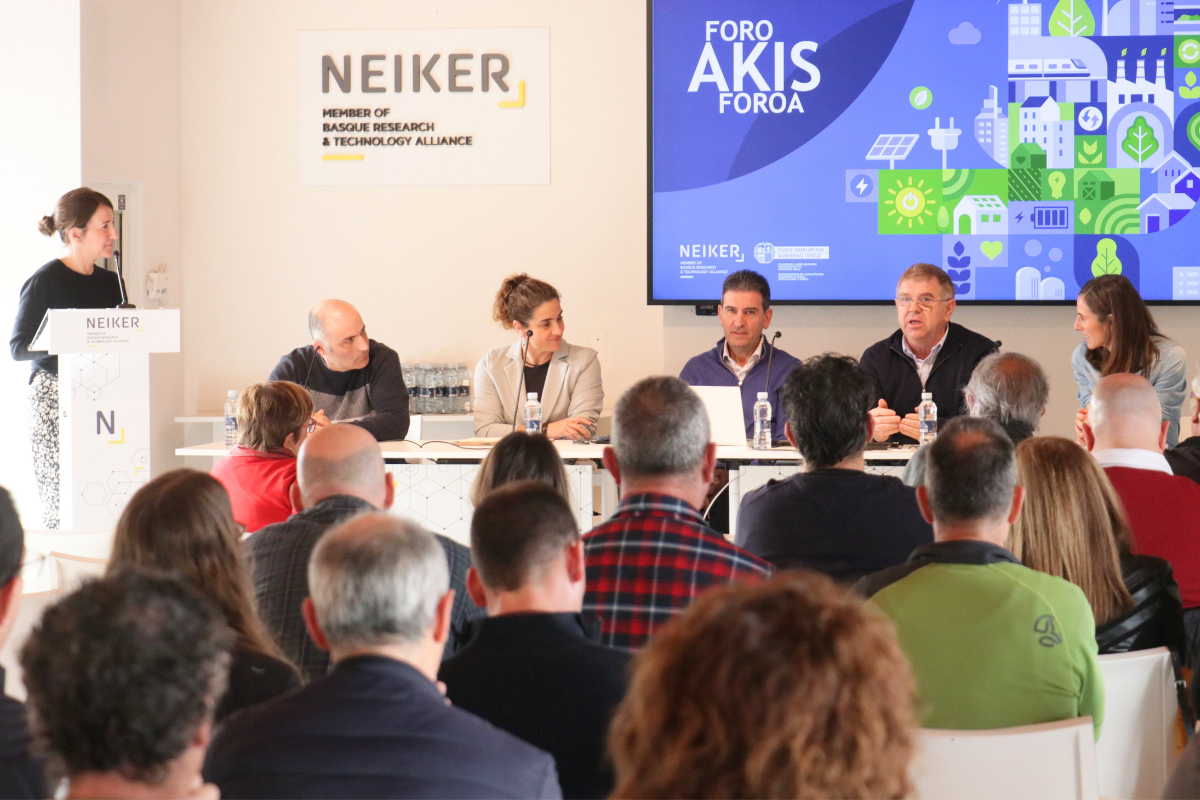
- This strategic roadmap seeks to restore the Basque Country’s leading role as a benchmark in potato production and strengthen the entire value chain.
- As part of the plan, NEIKER has developed the R&D&I block for seed potatoes.
The potato sector in the Basque Country is embarking on a strategic phase to ensure its sustainability and profitability in an increasingly complex global environment that requires innovative and coordinated responses. To address this need, NEIKER hosted a technical conference today at its headquarters in Arkaute as part of the 5th AKIS Forum.
At a time marked by climate change and the need to produce food more sustainably, Agricultural Knowledge and Innovation Systems (AKIS) are establishing themselves as the strategic tool for connecting all stakeholders in the sector. This ecosystem, promoted by the Basque Government’s Department of Food, Rural Development, Agriculture and Fisheries, facilitates the direct flow of research and new technological solutions from knowledge centres to the day-to-day activities of farmers and cooperatives.
The main highlight of this morning’s event was the presentation of the Potato Sector Plan, drawn up under the leadership of the Basque Government and in close collaboration between HAZI, NEIKER and the Provincial Council of Álava. This ambitious project has seen the active participation of all potato producers in the region and the sector’s management centres, such as AGA, ABERE and Lursail. This strategic roadmap seeks to restore the Basque Country’s leading role in seed production and strengthen the entire value chain. Within the plan, NEIKER has led the development of the R&D&I block for seed potatoes.
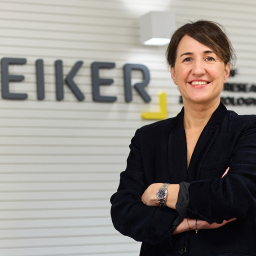
During her speech, NEIKER’s Director General, Olatz Unamunzaga, stressed that ‘it is a real honour for NEIKER to host and have been able to actively participate in the development of the Potato Sector Plan, a plan that stems from dialogue, collaboration and a shared vision of the future for the sector’. She also highlighted that ‘NEIKER offers the sector unique capabilities: we have the only germplasm bank, aeroponics facilities and experimental plots that allow us to generate solid knowledge, adapted to our territory and the real needs of producers.’
Knowledge transfer
To make innovation tangible for professionals, the plan includes the launch of a demonstration ‘flagship farm’ in Iturrieta. This benchmark space will allow farmers to see the best management techniques in practice and will provide detailed profitability analyses to encourage them to choose this crop over other alternatives.
Alongside this field deployment, NEIKER is leading the way in strengthening technological sovereignty by modernising infrastructure for obtaining mini-tubers. ‘Increasing self-consumption of base material in the Basque Country will reduce dependence on foreign markets and ensure a supply of seed with the highest guarantees of health and quality,’ said Amaia Ortiz, head of the centre’s Plant Production and Protection Department.
Applied research in response to new threats
The third block of the plan focuses on plant health and yield optimisation through cutting-edge solutions. In this area, NEIKER is working intensively on the creation of tools for the control of aphids, the main vector of viruses, within a state-level research project that collaborates with other affected sectors such as beet. This work ranges from the use of repellents and biological control to advanced insect flight prediction systems.
At the same time, trials are being conducted to control other critical threats such as the leaf miner, which is tackled through a combination of irrigation management, crop rotation and biological products, as well as Zebra Chip disease, which is a major concern in the sector. This research activity also extends to the international arena through the coordination of the European PATAFEST project, in which 13 countries are working together to control post-harvest diseases and the aforementioned bacterium.
All this scientific expertise is complemented by the genetic improvement of our own varieties and the validation of new clones, with the aim of offering the sector plants that are adapted to climatic conditions and current market demands.
A connected sectoral ecosystem
Consolidating this strategy requires aligning expert knowledge with the real needs of the value chain. For this reason, the conference featured a presentation by Fernando Alonso Arce, agricultural engineer and advisor to the Spanish Seed Potato Association. With more than 40 years of experience and author of the reference work ‘El cultivo de la patata’ (Potato Cultivation), Alonso analysed the technical evolution of the sector to project the solutions that producers demand today in the face of new quality requirements and European regulations.
This technical vision served as the basis for the final round table, moderated by the director general of NEIKER, with the participation of Jon Legorburu, technical engineer at Grupo UDAPA; Nerea Múgica, technical director at GARLAN; Javier Díaz Espada, managing director of Coop. Nª Sª de Ocon; Andrés Lecuona, manager of Alavesa de Patatas; and representatives from HAZI.