NEW
NEIKER is strengthening innovation in the primary sector through thirteen strategic initiatives for agriculture, livestock farming and forestry in the Basque Country
14 July 2026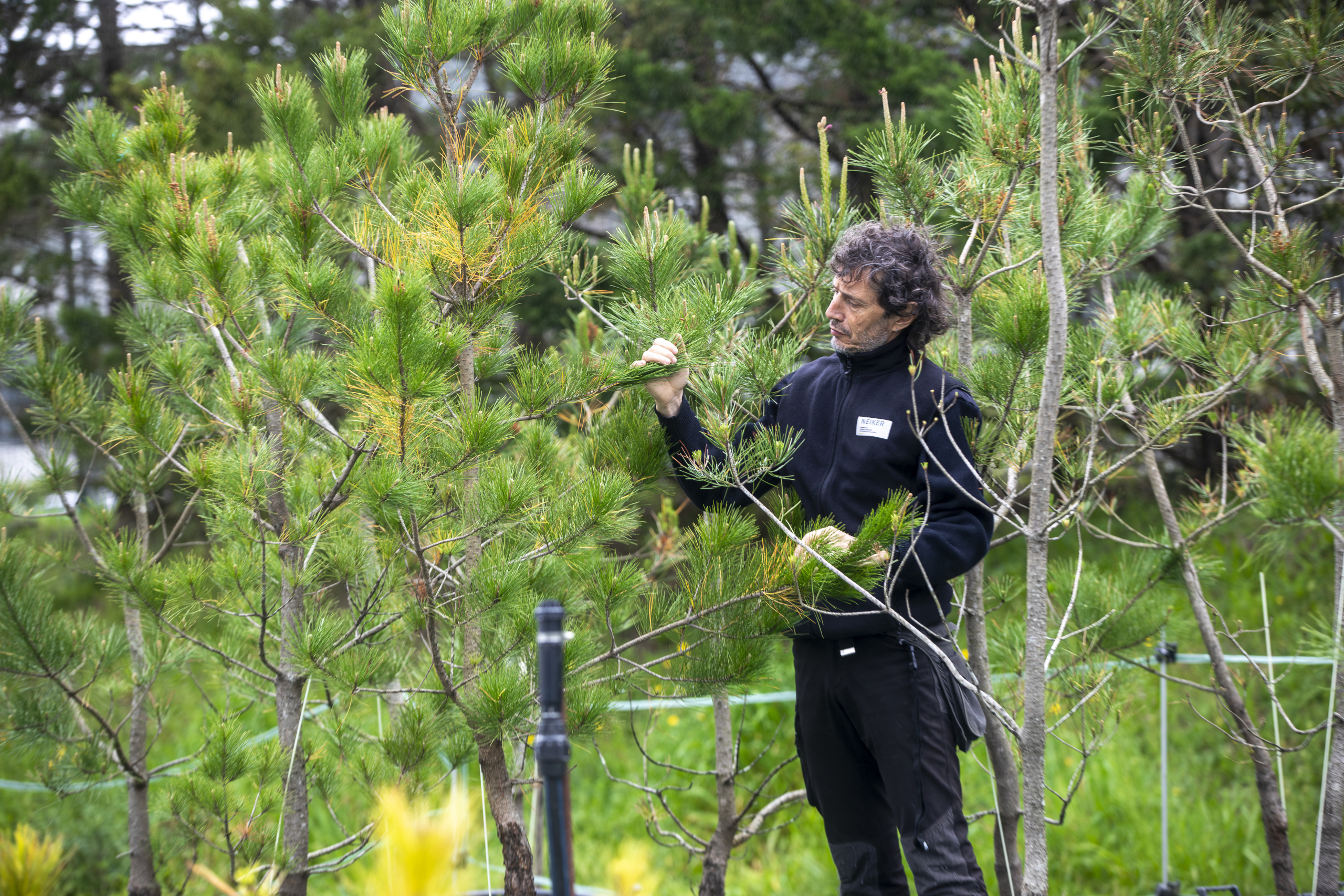
- The Basque Government’s Department of Food, Rural Development, Agriculture and Fisheries, in collaboration with NEIKER, is promoting a series of initiatives that combine health monitoring, precision farming, genetic improvement and agricultural trials to tackle the challenges facing the Basque primary sector
The agri-food sector in the Basque Country faces complex challenges in a context characterised by digitalisation, generational renewal, environmental sustainability and adaptation to climate change. Against this backdrop, NEIKER, in partnership with the Basque Government, is implementing 13 initiatives involving an investment of over 2.5 million euros, aimed at health monitoring and transferring scientific knowledge to the primary sector to improve the competitiveness, resilience and profitability of agricultural, livestock and forestry holdings.
The initiatives cover virtually the entire Basque agroforestry chain. Some strengthen health surveillance under the One Health approach to anticipate emerging diseases that may affect wildlife and livestock. Others focus on precision agriculture, the development of more resilient crops, or the conservation and genetic improvement of native breeds. They also include long-term trials in vineyards, orchards and forestry systems, as well as the use of digital technologies to optimise irrigation, fertilisation and greenhouse production. The common aim is to reduce uncertainty in the sector and increase its capacity to adapt to global change.
In the words of NEIKER’s Director General, Olatz Unamunzaga, “these initiatives aim to transfer results that help improve farm profitability, strengthen animal and plant health, and ensure the sustainability of production systems”. As she explains, “these are projects that arise from actively listening to the sector and are designed to have a real impact. Some form part of the Berritzen transfer plan, others are part of the ‘Agritech’ strand to accelerate the adoption of advanced technologies, and others are based on the ‘One Health’ approach, which integrates animal, environmental and human health to anticipate new risks”.
Set out below are the main areas of action and some of the progress that is already being made on the ground.
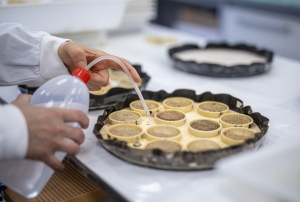
Baltsan, the major long-term trial
Baltsan is the network of experimental plots through which NEIKER conducts long-term trials, not just over a single growing season. In this way, it measures the actual impact of different farming and livestock rearing methods over a period of years. Several trials are being carried out simultaneously at its farms in Arkaute, Zambrana and Iturrieta. There are plots of stone fruit trees, a gene bank of cider apple varieties and vines with genes conferring resistance to fungi. Conventional and organic fertilisation methods for cereals are also being compared, as are rotational grazing and continuous grazing. The common aim is to understand how to restore soil health and reduce environmental impact without compromising production. In recent months alone, NEIKER has organised four technical seminars on these trials, attended by around 150 participants, including livestock farmers, technical staff and representatives from public authorities.
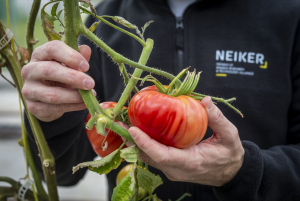
EnviroEuskadi: measuring the environmental footprint of what we eat
EnviroEuskadi calculates, sector by sector, the environmental impact of the Basque food chain. The project covers everything from dairy farms to wineries, including bakeries and fish canneries. NEIKER, AZTI and the Basque Food Cluster are collaborating on the collection and analysis of real-world data from dozens of representative companies. Using this information, it builds its own database for the Basque Country and adapts the Envirodigital software. This tool is capable of calculating the environmental footprint of each product using the European PEF (Product Environmental Footprint) methodology. In this way, each sector will be able to identify where to reduce its impact and communicate this reliably.
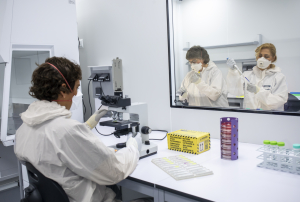
One Health surveillance and emerging diseases
Animal, human and environmental health are interconnected. That is why NEIKER works alongside the Provincial Councils of Araba, Bizkaia and Gipuzkoa, the Basque Government’s Department of Health and other institutions on various surveillance programmes – some of which have been running for over three decades – focusing on livestock, wildlife and arthropods that can transmit diseases.
Among other programmes, the team is involved in the avian influenza surveillance programme, which covers both domestic and wild birds; the programme on bovine spongiform encephalopathies (‘mad cow disease’); the monitoring of antimicrobial resistance; the bovine tuberculosis eradication programme, as well as the programme for wildlife diseases that can affect both livestock and humans. For example, as part of the surveillance programme focused on vectors, 258 ticks collected from hospitals were examined last year, compared with 6 in 2019. Furthermore, as part of this programme, invasive mosquito species such as the tiger mosquito are being monitored in more than ninety municipalities across the Basque Country.
At the same time, a multidisciplinary group of experts has analysed the risk of contagious nodular dermatosis entering the Basque Country. This is a disease affecting cattle that has never been detected in the autonomous community and which can cause serious economic losses. The analysis carried out indicates, with a high degree of uncertainty, that the risk of the disease entering the region is currently low; however, this risk could be reduced to very low if vaccination could be extended to the whole region – a measure which is not within the Basque Government’s control.
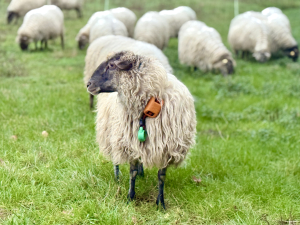
Sensors for more precise livestock farming
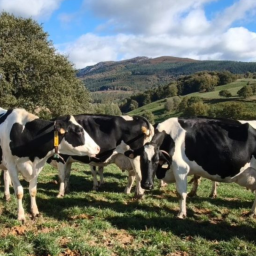
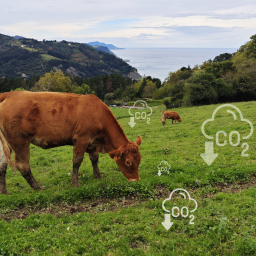
Precision livestock farming involves installing sensors on farms or on the animals themselves, such as cows or sheep. These sensors measure, in real time, temperature, humidity and gases that affect animal welfare, or record data on their behaviour, providing information on how long they spend grazing or ruminating, for example. Using this data, NEIKER has developed a predictive model that can forecast 81 per cent of drops in milk production up to 72 hours in advance, based on weather conditions. This enables action to be taken before the problem becomes irreversible. The work also involves the search for genetic markers associated with cattle’s ability to cope with heat stress, thereby enabling genetic selection to be directed towards this end. It also includes sensors to measure nitrogen levels in slurry and GPS collars that help plan extensive grazing in the Basque mountains.
Genetics for the benefit of indigenous breeds
The Basque Country is home to seven indigenous livestock breeds, ranging from the Pottoka to the Encartaciones donkey. Keeping these breeds alive requires preventing closely related animals from breeding. NEIKER analyses the genealogy of each breed and calculates the degree of inbreeding among the sires. This enables livestock breeders’ associations to select the most suitable matings. Thanks to this work, the family tree of more than 80 per cent of the population is now known in detail for some breeds. This is a much higher percentage than just a few years ago, whilst inbred levels are kept as low as possible.
Laboratories that safeguard plant health
NEIKER’s plant health laboratory is the first line of defence against pests and diseases that can ruin harvests. Last year, more than 37,000 tests were carried out solely to certify that seed potatoes, cereals and plant products were free from harmful organisms. In addition to these samples, a further 22,000 were tested to detect quarantine bacteria, viral diseases in vines and beetroot, and the dreaded fire blight. In 2026, the laboratory will also step up its monitoring of the pine wood nematode, a pest already detected near the French border. It is also developing new diagnostic techniques for phytoplasmas and emerging bacteria in potatoes.
The potato plan: from seed to drone
The Potato Plan aims to increase the area devoted to seed potatoes produced in the Basque Country and thereby reduce dependence on varieties from elsewhere. To achieve this, NEIKER is propagating mini-tubers in peat and using aeroponics, a technique that enables production to be doubled. Controlling climatic conditions makes this leap possible. Furthermore, at the Faro de Iturrieta farm, it is trialling treatments using drones, repellents and new organic clones. Complementing this work is a range of new technologies that use cameras and hyperspectral sensors to detect plants infected with potato virus Y before they show visible symptoms. The most recent tests have achieved a 97 per cent accuracy rate.
Alternative crops for a changing climate
NEIKER is assessing the possibility of introducing new crops depending on the area. In the Llanada Alavesa, it is trialling vegetables and pulses such as onions, soya beans and leeks. In the Valles Alaveses, it is trialling stone fruit trees such as walnut and hazelnut. And in the Rioja Alavesa, it is exploring the option of fruit trees such as peach and cherry. In all cases, it analyses both the agronomic suitability and the market potential they offer. The work does not stop at trials: this year, NEIKER has published guides on the organic cultivation of soya and heritage wheat varieties and has supported farmers from the Álava Agricultural and Livestock Union (UAGA) in their first commercial onion crop.
More precise fertilisation and irrigation
Precision farming allows the amount of fertiliser or water to be adjusted to the needs of each individual plot. This avoids applying the same amount across the entire field. NEIKER works with farmers in Garlan, in the Llanada Alavesa region, to create variable-rate fertilisation maps. They then help the farmers to upload these maps to their tractor control panels. The process has already covered 74 plots and 330 hectares, all of which have been validated. At the same time, it maintains Agrimeteo, a network of virtual weather stations developed in collaboration with Euskalmet. It also manages Urezta, the app that calculates on a daily basis how much water the soil in each plot requires. Using this data, it helps farmers decide when and how much to irrigate.
Currently, all the information is distributed via email, WhatsApp and social media for all agroclimatic zones in Álava and for four different crop types (potatoes, beetroot, pulses and vegetables), and it provides public information systems to tailor irrigation to the type of soil.
More efficient greenhouses
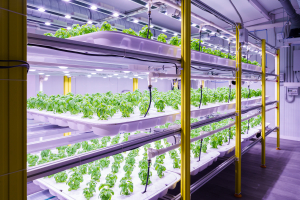
In Basque greenhouses, NEIKER is researching new virus-resistant tomato varieties. It is also studying the effect of photovoltaic panels installed on the roof on tomato and lettuce production. LED lighting tested on Gernika peppers and chillies has improved commercial production of ‘extra’ quality produce by between 20% and 30%, whilst indoor cultivation trials of red-leaf lettuce have significantly reduced water consumption. They require just 2.25 litres per kilo of produce, compared with the 25 litres needed for traditional soil-based cultivation. These advances are passed on directly to cooperatives such as Garaia, Artandi and Barrenetxe, which have been involved in the trials from the outset.
Vineyards and apple orchards: science for the Basque agricultural landscape
In Rioja Alavesa, Bizkaiko Txakolina and Arabako Txakolina, NEIKER works with more than twenty wineries. Together, they maintain a network of demonstration plots where they test cover crops, precision irrigation, rational fertilisation and sustainable alternatives to plant protection products. The team is also reviving almost forgotten grape varieties and studying the soil microbiome of the region’s vineyards. In addition to this work, they are investigating the alternate bearing of cider apple trees. This refers to the phenomenon whereby a year of high production is followed by another in which the apple trees, due to a problem that has yet to be determined, fail to bear fruit. To study and minimise this phenomenon, NEIKER has established a germplasm bank comprising thirty varieties and has drawn up a roadmap extending to 2028.
The forest to come
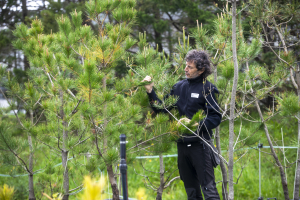
The forestry initiative aims to develop stands of trees that are more resistant to climate change and disease. To this end, NEIKER selects radiata pine specimens with greater genetic variability. It also applies gene editing to induce tolerance to pathogenic fungi and develops techniques for the early detection of forest diseases. The work is carried out in collaboration with the Confederation of Foresters of the Basque Country and the three provincial councils. Nurseries such as Eskalmendi are also involved, ensuring that the advances reach those who manage the forests on a daily basis.
Through these thirteen initiatives, NEIKER not only generates data but also coordinates joint solutions. The ultimate aim is to ensure that the Basque primary sector remains a benchmark for quality, sustainability and resilience, with science as a key ally in tackling the challenges of the future.