NEW
NEIKER provides the key to combating the walnut fruit fly and boosting the profitability of walnut orchards
23 March 2026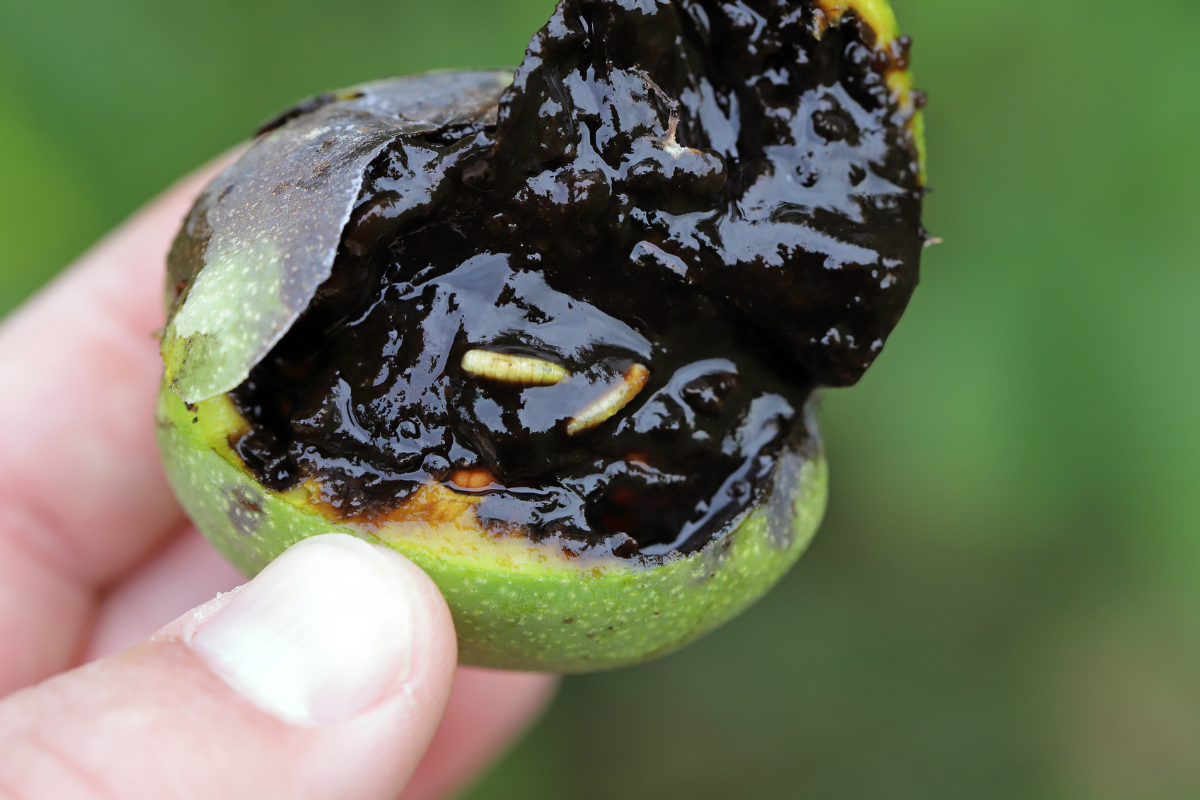
- On Thursday 26 March, the technology centre is organising a technical seminar at Lantarón Town Hall (Álava) to discuss the control of a pest that affects the commercial value of the crop
- The insect damages the outer shell of the nut and makes it difficult to shell, reducing the commercial value of the nut despite the fact that the kernel is fit for consumption
- The Basque Country produces only 20% of the walnuts it consumes, which presents an opportunity to professionalise cultivation and improve the yield of local plantations
Walnut cultivation presents a business opportunity for the Basque primary sector, thanks to a market that is increasingly demanding locally sourced products. However, its profitability is currently hampered by the spread of the walnut fruit fly (Rhagoletis completa), an insect that damages the fruit’s shell and reduces its commercial value to an extremely significant extent.
With a view to presenting solutions for the sector, the NEIKER technology centre together with the Añana Rural Development Association, will be organising a technical seminar on 26 March at Lantarón Town Hall (Álava), aimed at professionals, public authorities and management bodies.
This pest, first detected in North America and introduced into Europe via Italy, has become the main plant health concern for walnut growers. After entering via Galicia, the insect has spread along the Cantabrian coast until it became established in Gipuzkoa and Bizkaia, and is now increasingly present in the province of Álava.
“The damage occurs when the larvae feed on the green husk of the walnut, causing the fruit to darken and making it difficult to peel later on. This deterioration affects the walnut’s external appearance and, as a result, significantly reduces the product’s commercial value,” explains Amaia Ortiz, head of the centre’s Department of Plant Production and Protection.
To mitigate these effects, NEIKER is leading a range of research projects focused on developing integrated pest management techniques that enable action to be taken at key stages of the insect’s life cycle, which takes place mainly underground.
During the meeting in Lantarón, effective strategies for reducing damage will be presented, such as mass trapping using pheromones and other attractant baits, aimed at capturing adult specimens before they lay their eggs. Advances in biological control will also be presented, including the use of natural soil microorganisms, such as fungi, which act on the larvae to eliminate them when the soil temperature rises after winter or when the biological cycle is reactivated at temperatures above 10 degrees, as well as the use of foliar repellents.
Market professionalisation
The implementation of these measures is essential for professionalising a crop with significant market potential. In the Basque Country, nut consumption exceeds 4 kg per person per year, with walnuts being the main product in this category.
Despite this demand, local production meets only 20% of market needs. Official statistics currently show 147 hectares of walnut groves in the Basque Country, a figure that is rising steadily year on year, thanks to the establishment in Álava of a post-harvest processing facility in Rivabellosa.
“This discrepancy highlights the widespread presence of small-scale farming for personal consumption in rural villages, but also indicates considerable scope for professionalisation to meet local demand,” notes the researcher.
To improve farm performance, the technology centre is working with the Añana Regional Development Agency on an experimental field in Zambrana (Álava), where the adaptability of different varieties to current phytosanitary and climatic challenges is being assessed.
All this knowledge gained in the field will be shared at the session on 26 March, which will feature presentations by specialists from NEIKER and the Provincial Councils of Bizkaia and Gipuzkoa, as well as from other autonomous communities. The event will also include a technical presentation by Viveros Galbis on varietal resistance and technological solutions from companies such as Seipasa and SEDQ.
Through this event, NEIKER is reinforcing its commitment to the transfer of applied knowledge to ensure the economic viability of walnut cultivation in the Basque Country.