NEW
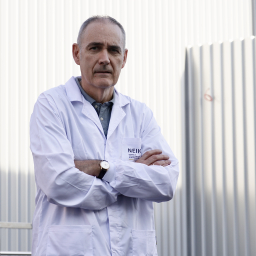
Marta Barral: “Avian influenza has lost its seasonality, and cases continue to occur in spring and summer as well”
13 January 2026
The avian influenza virus has changed its behaviour. What was once a seasonal threat associated with cold weather is now detected throughout the year, affecting new species and keeping the sector on constant alert. To understand the scope of this new reality, Marta Barral, a researcher at NEIKER’s Animal Science Department, explains the evolution of the virus, the risks of it jumping to mammals and, above all, the effectiveness of the protocols that currently protect farms in the Basque Country.
Avian influenza has become a recurring concern for the sector and the administration. In this context, there is talk of a constant ‘trickle’ of cases. What is the real situation today in the Basque Country and what type of virus are we dealing with exactly?
Indeed, this ‘trickle’ of cases has been observed in wild birds, with the yellow-legged gull being the most affected species. The subtype currently circulating is highly pathogenic H5N1 (H5N1 AP).
This is not a new virus, as this subtype was first isolated in Scotland in 1959 and has been evolving ever since. After causing the first case of transmission to humans in China in the 1990s and spreading from Asia in 2005, it re-emerged in Europe in 2021. It re-emerged in 2003-2005 in Asia, from where it spread to different continents, also reaching Europe. More recently, in 2021, a variant of the same H5N1 AP subtype has reappeared in Europe, but with a different impact and other epidemiological characteristics. This virus has since spread throughout virtually the entire world, having been detected for the first time in the Basque Country in wild birds in 2022.
You mention that the characteristics have changed. Why is it that the flu, which used to be seasonal, is now detected throughout the year?
This is one of the main changes. Traditionally, highly pathogenic cases were concentrated in the colder seasons, especially in winter. But since the outbreaks in 2021, we have seen a loss of this seasonality: cases continue to occur in very high numbers in spring and summer as well.
In fact, in the Basque Country, we detected the first cases in May 2022, continued until June of the following year, and even in 2025, we identified the first cases in July. We believe that this may be related to changes in the structure of the virus, either due to mutations or recombinations with other subtypes, which have caused it to acquire characteristics that it did not have before and that also allow it to infect a greater number of species.
The virus has jumped to wild mammals. What does this mean for the safety of livestock farms?
This does not represent a major change for livestock farm management. The biosecurity measures that must be maintained on an ongoing basis remain useful, as the farms themselves are the first to have an interest in preventing wild carnivores from accessing their land, for obvious reasons. In the Basque Country, however, we maintain surveillance not only on birds, but also on wild mammals, mainly carnivores, but also wild boars and marine mammals.
Is there a risk for people who work in contact with these animals?
The risk to the general population is considered low; however, the risk to personnel directly exposed to infected animals is between low and moderate. Therefore, the use of personal protective equipment (PPE) and its proper management is recommended. Seasonal human influenza vaccination is also recommended for those who have contact with infected birds. The aim is to prevent possible co-infection with human influenza viruses, which could lead to recombination and cause the H5N1 virus to evolve more rapidly.
There is a coordinated action protocol in the Basque Country (together with ELIKA, Provincial Councils and the Basque Government). Could you describe exactly what happens once a wild bird is found dead or showing suspicious symptoms?
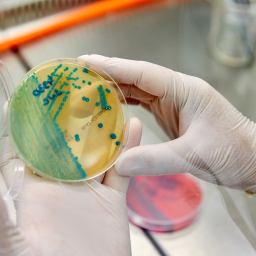
When a suspicious bird is detected, cloacal and oropharyngeal swab samples are taken and analysed here at NEIKER. If the sample tests positive, the samples are sent to the reference laboratory for confirmation and the outbreak is officially declared.
At the same time, surveillance is specifically increased in the area where the bird was found and, in general, throughout the Basque Country, in order to quickly locate other possible cases. It is essential to remove the carcasses of infected wild birds from the environment to prevent the spread of the virus. In addition, these cases are reported to the sector so that they can reinforce biosecurity measures on their farms and increase surveillance in the event of any suspicion.
Confinement of birds raises concerns about animal welfare. Is it possible to allow them to go outside safely?
Yes, there are extraordinary measures to authorise exceptional releases when there are risks to animal welfare, always under strict conditions.
To do so, the farm must physically delimit a small outdoor area, protecting it with bird netting or devices that prevent wild birds from entering, and always feeding and watering the birds inside the facilities or preventing them from coming into contact with food or water intended for poultry. In addition, complementary deterrent measures may be implemented, such as scarecrows, intermittent sound emitters or holographic tapes. It is also essential to clean the area beforehand to remove any sources of attraction, such as ponds or waste.
To conclude, what message would you send to the sector in light of this persistent scenario?
I would like to convey that, despite the difficulties and extra effort involved in managing avian influenza at all levels, the protocols and measures being implemented are working.
Unfortunately, it seems likely that avian influenza will continue to be present in the environment, circulating in wild birds with varying degrees of prevalence. It is therefore necessary to maintain the collaboration of all stakeholders, from the administration and laboratories to farmers and veterinarians, to ensure the early detection of possible cases and prevent their spread.