NEW
José Luis Lavín: “Bioinformatics is the bridge that transforms big data into applicable knowledge for the sector”
18 February 2026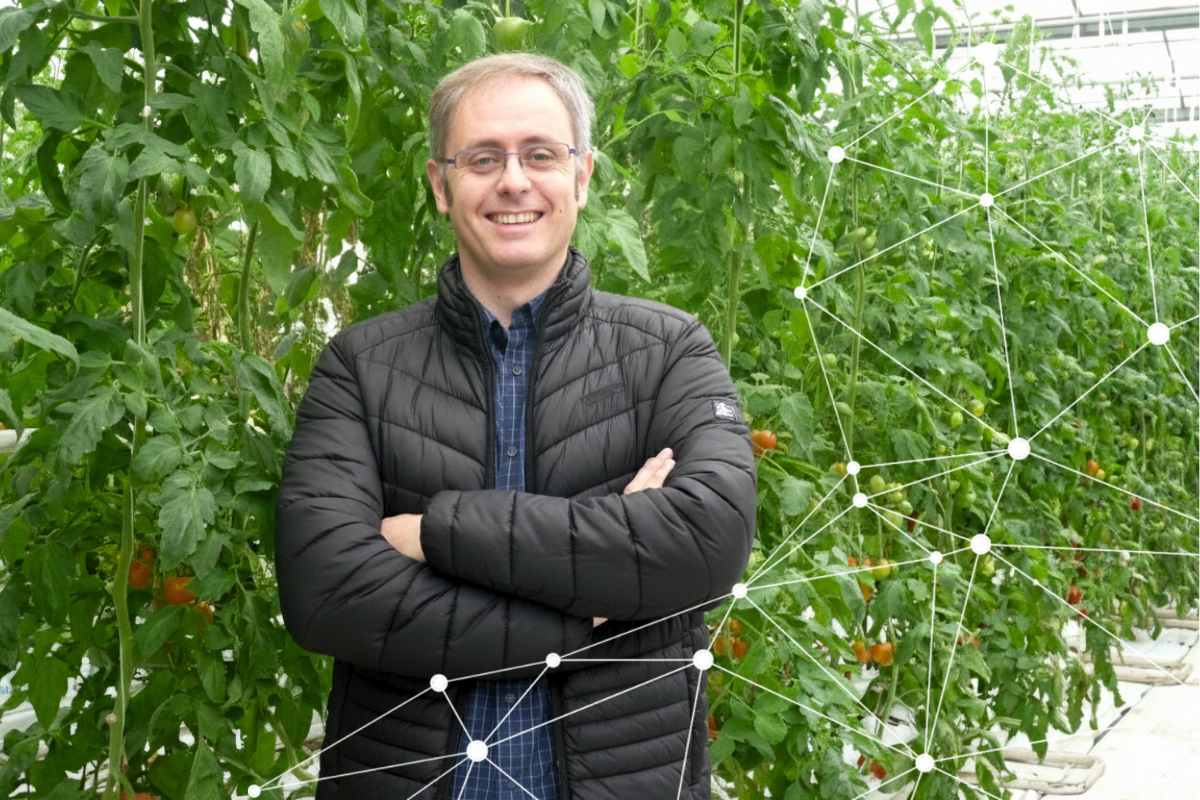
Bioinformatics has established itself as a strategic tool for optimising the processing of large volumes of biological information. This discipline makes it possible to anticipate threats by providing evidence that enables informed decisions to be made and optimises activity in the primary sector. Noteworthy in this field is the work of José Luis Lavín, PhD in Genetics and Microbiology from the UPNA and expert in the analysis of ‘Omics’ data from high-throughput sequencing technologies. With a career linked to the Joint Genome Institute (USA) and CIC bioGUNE, Lavín integrates the area of big data analysis and the application of machine learning techniques into the Department of Applied Mathematics at the NEIKER technology centre, with a view to supporting and strengthening the resilience of the Basque primary sector.
How would you explain what a bioinformatician does at a centre like NEIKER and why they are key to the primary sector?
We act as a bridge between biology and data analysis. Our work consists of processing and analysing large volumes of biological information, such as genomic sequences, field records and historical data, to transform them into practical and applicable knowledge. This is vital for the primary sector, which today faces challenges such as emerging diseases and climate change. In short, bioinformatics provides an evidence-based vision that enables informed decision-making and reduces economic risks.
Unlike other researchers who focus on a single species or area, your work is cross-disciplinary. How does big data analysis help projects in such diverse areas to progress with greater precision?
This cross-disciplinary approach is one of our greatest advantages. Although projects deal with different topics, such as disease resistance in livestock or plant variety improvement, the analytical methods are usually the same: genetic pattern detection or predictive modelling. By applying data analysis in a shared manner, we reuse workflows and accumulated experience, accelerating projects, reducing development times and avoiding working in isolation, as lessons learned in one area are quickly put into practice in another.
How does this discipline enable us to anticipate problems even before they become critical in the field or on farms?
It helps us move from a reactive response to a preventive strategy. By analysing genetic and environmental data, we identify early warning signs such as the emergence of new pathogen variants or changes in soil microbes. These indicators function as early warning systems. They allow us to anticipate disease outbreaks or climate adaptation problems and intervene through management measures or the selection of resistant varieties before the impact becomes severe.
Today we generate a huge amount of biological information. As an expert in managing and processing this data, what is the biggest challenge you face in ensuring that all this information is not lost and is converted into useful knowledge for NEIKER?
The main challenge is not storage, but rather organising, standardising and ensuring that data is reusable in the long term. Data is often generated in a wide variety of formats and qualities. The challenge lies in integrating and documenting it rigorously so that it can be analysed years later. To achieve this, we need adequate infrastructure and, above all, smooth collaboration between bioinformaticians and the rest of the research team.
In the context of climate change, biological data management is key. How does bioinformatics contribute to predicting the behaviour of local varieties?
Integrated databases allow us to combine genetic information with climate data and field trials. Using machine learning models, we identify which parts of the genome confer tolerance to drought or extreme heat. This allows us to model future scenarios and predict how local varieties will respond. In this way, we support practical decisions such as the conservation of local germplasm and provide useful recommendations to farmers and livestock breeders.
What is the differential value of applying bioinformatics to the challenges of modern agriculture and livestock farming?
The real value lies in applying cutting-edge science to real-world problems. We transform complex data into actionable information: improving animal health through the rational use of antibiotics or optimising water and fertiliser consumption. In a region such as the Basque Country, with its unique terrain and climate, bioinformatics plays a strategic role. It directly helps to make our primary sector more sustainable, competitive and better prepared for the coming decades.