NEW
Solar panels as sheep shelters: facilitating rest and keeping sheep on the pasture
10 February 2026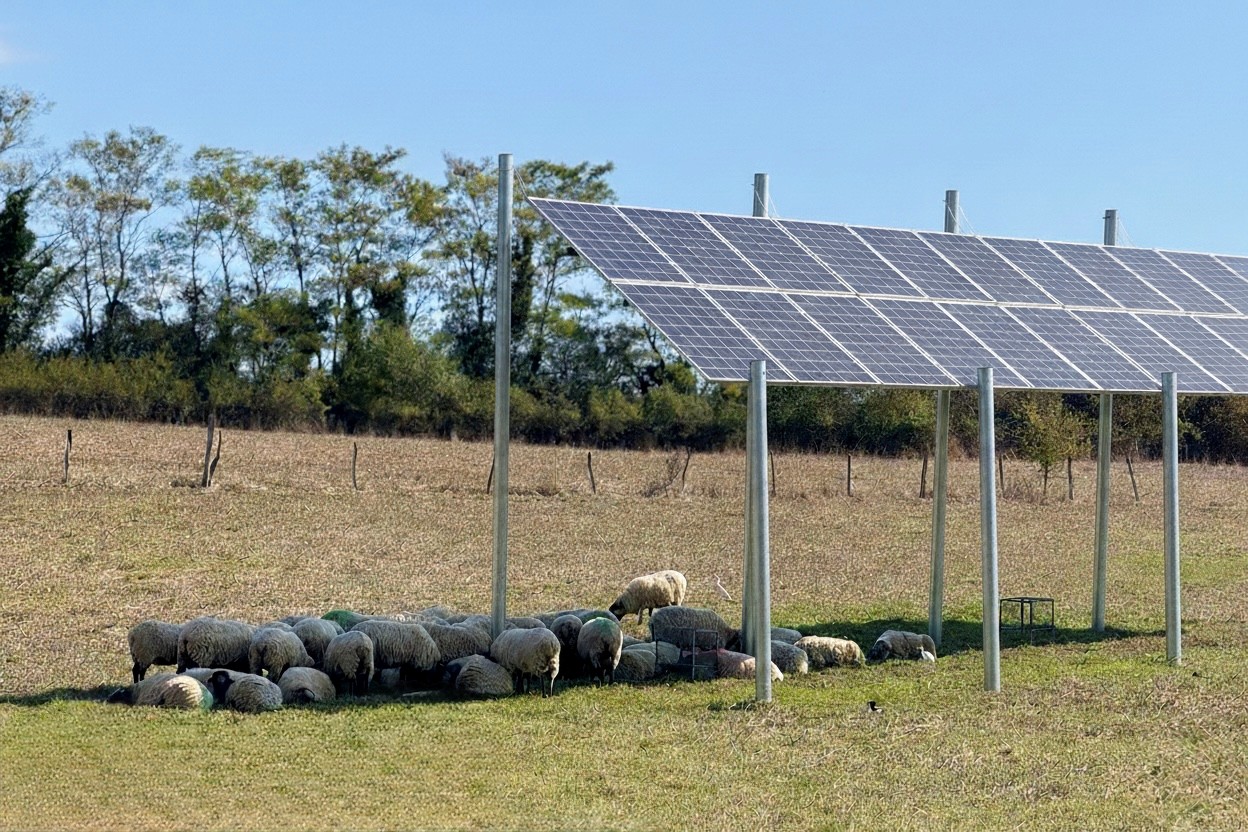
- NEIKER analiza a través de la iniciativa europea Agripower el efecto de las estructuras fotovoltaicas sobre su uso por parte de los animales y el ecosistema suelo-pasto.
- Los primeros resultados indican que las ovejas utilizan el sombreo de los paneles de forma significativa durante las horas de calor.
The NEIKER technology centre is making progress in studying the coexistence of solar energy generation and livestock farming through its agrovoltaic experimental unit, installed in April 2025 at its headquarters in Arkaute. This infrastructure, which covers an area of 8,000 m², is the largest experimental unit in Spain for arable crops and is currently hosting the development of the European AgriPower project.
The initiative, led by NEIKER, aims to test smart agrovoltaic systems that maintain agricultural productivity while optimising energy yield. This infrastructure has an AV-3 Category sub-unit, intended for sheep farming, where the evolution of pastures and animal behaviour under photovoltaic structures is comprehensively evaluated.
Within the framework of this evaluation, one of the main focuses is to determine how the structures influence the welfare of the livestock. The data obtained to date confirm that the sheep make significant use of the shade provided by the panels during the days and hours of greatest sunlight.
‘This availability of artificial shade has proven effective in improving the animals’ thermal balance, which represents a spatial enrichment that can be beneficial to their well-being,’ says Nerea Mandaluniz, a researcher in the Animal Science Department at NEIKER.
This preference for shade has led to a change in the flock’s resting patterns on the plot. Sheep usually seek shelter under the trees bordering the pastures during the middle of the day. However, with the installation of the agrovoltaic system, this effect has been replaced by the panels, allowing the animals to remain in the central area of the pasture to rest during the hottest hours of the day.
Analysis of soil-pasture interaction
Beyond animal behaviour, the research analyses the interaction between livestock, soil and vegetation under solar panels.
“On the one hand, shade causes changes in radiation, temperature and soil moisture, factors that we study to understand their effect on grass growth and quality, as well as soil health. On the other hand, we evaluate the role of the animal in this environment, considering both the benefits of manure as a natural fertiliser and the possible negative effects of soil compaction due to intensive use of shaded areas,” explains the researcher.
To complete this analysis, the centre monitors grass production quality and soil health. Following an initial control sampling carried out in 2024, NEIKER plans to conduct a second analysis this year to compare the evolution of the soil-grass-animal ecosystem under the panels with that of open grassland.
All this work is part of the AgriPower project, which aims to determine the effect of panel shading on the entire ecosystem (soil-grass-animal) under continuous grazing management. The initiative seeks solutions to integrate renewable energies into the primary sector in a sustainable manner, in line with NEIKER’s strategy of seeking alternatives to mitigate the effects of the climate emergency and promote the competitiveness of farms.