NEW
Mildew and Oidium-Resistant Grapes to Boost Sustainable Viticulture
2 December 2025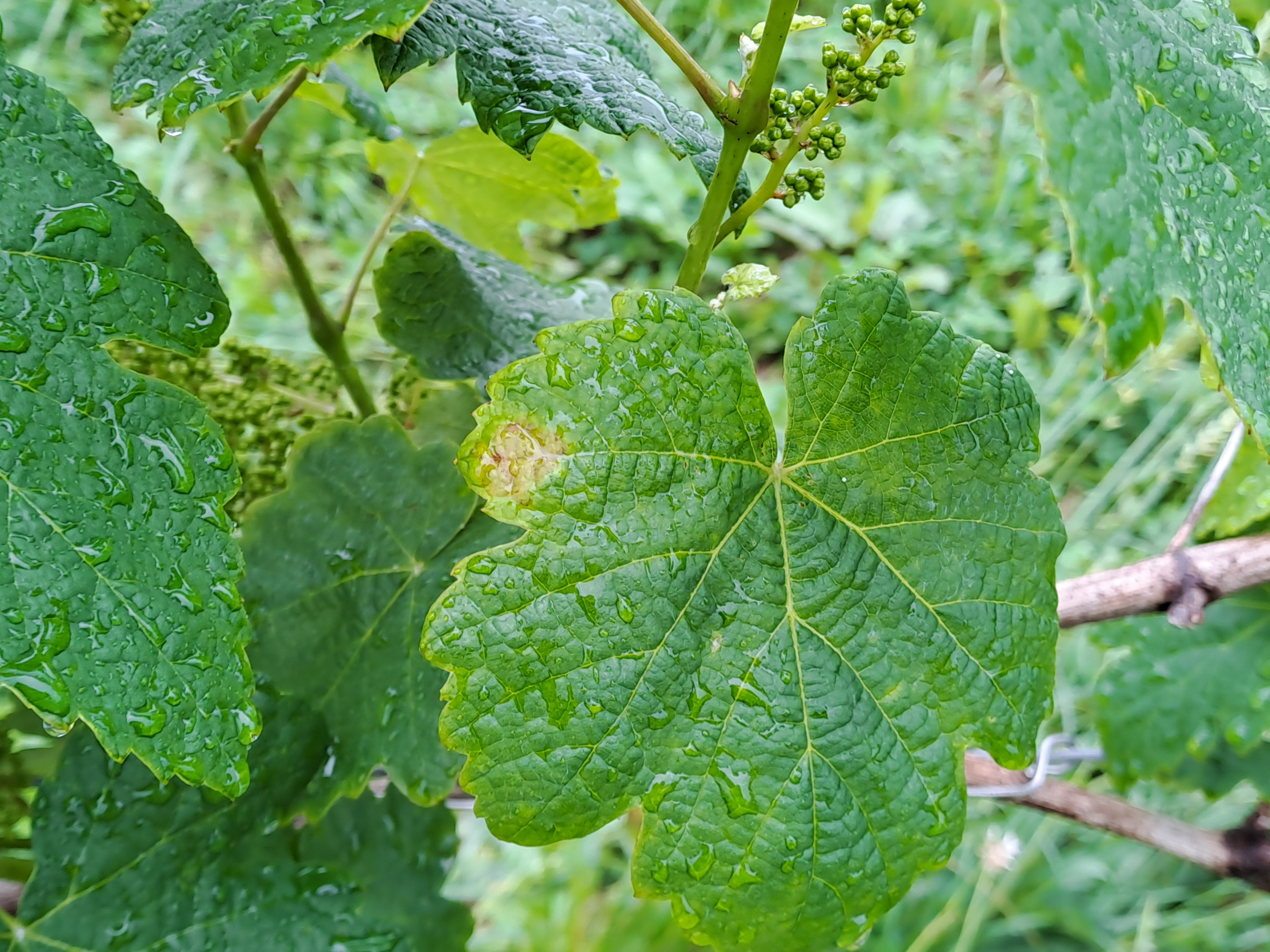
- The NEIKER technology centre is participating in the European project GRAPEBREED4IPM, which advocates the use of disease-resistant grape varieties to reduce the use of fungicides.
- Different selection lines that combine genetic resistance to diseases are being studied, and their behaviour and performance are being evaluated in production plots under real growing conditions.
- The initiative contributes to the objectives of the European Green Deal, the 2030 Biodiversity Strategy, and the ‘Farm to Fork’ initiative.
Reducing chemical treatments, preserving the environment, and maintaining grape quality are the main objectives that currently set the roadmap for European viticulture. Achieving them becomes a significant challenge when diseases such as mildew or oidium, which can affect both production and product quality, are usually controlled by applying fungicides. In this scenario, it is a priority for the sector to promote innovations that allow cultivation with fewer inputs and, at the same time, increase resilience against diseases that affect the vineyard.
With this purpose, the NEIKER technology centre, an entity under the Department of Food, Rural Development, Agriculture and Fisheries of the Basque Government, is participating in the European project GRAPEBREED4IPM, which focuses on the development and promotion of Disease Resistant Varieties (DRVs), capable of adapting to the soil and climate conditions of each region.
To this end, different selection lines that combine genetic resistance to diseases are being investigated, evaluating their behaviour and performance in production plots under real growing conditions.
In this vein, NEIKER, with extensive experience in sustainable solutions for the wine sector, offers technical support in the selection of improved plants and collaborates with local winegrowers to identify the varieties that show the best behaviour against diseases and adequate adaptation to the territory’s soils and climates. “This local work constitutes the basis for evaluating the effectiveness of the new varieties in real growing conditions,” explains Ana Díez, a researcher at the centre’s Department of Plant Production and Protection.
To place these results in a broader context and validate their applicability, the centre participates in the OSCAR observatory, promoted by INRAE and IFV in France. This is a network that brings together production plots with resistant varieties in different European environments, which facilitates the exchange of technical information and contributes to refining management strategies adapted to various climatic and soil conditions.
Furthermore, to understand the effects of these new varieties on the vineyard ecosystem, NEIKER participates in the evaluation of biodiversity in plots with DRVs, both in organic management systems and in those with low chemical protection. Specifically, the presence of arthropods, the microbiota associated with the grape, and other ecological indicators are analysed to study the interaction between the resistant varieties and the natural environment of the vineyard. “The information collected will serve to design agronomic practices that promote the sustainability of the crop, reduce environmental impact, and favour the natural balance of the ecosystem,” Díez points out.
50% Reduction
The application of DRVs brings benefits to both conventional and organic farming, which, although it uses products of natural origin, also relies on phytosanitary treatments. By introducing these resistant varieties, winegrowers can reduce the need for chemical inputs, increasing the efficiency and sustainability of their farms. As the researcher points out, “the reduction in the use of fungicides is expected to reach 20% by the end of the project, with a long-term goal of 50%.”
For these practices to take root in the sector, decision support tools, phytosanitary management guides, and planting guidelines adapted to the conditions of each region will be developed. In addition, personalised roadmaps will be prepared to facilitate the planning of the implementation and monitoring of the new grape varieties.
Overall, GRAPEBREED4IPM contributes to the objectives of the European Green Deal, the 2030 Biodiversity Strategy, and the “Farm to Fork” initiative, which promote an agri-food sector with lower use of chemical products, greater biodiversity, and more sustainable and resilient practices against pests and climate change.
More on GrapeBreed4IPM
GrapeBreed4IPM, “Developing sustainable solutions for viticulture through multi-actor innovation geared towards genetic improvement for Integrated Pest Management,” began in April 2024 and will run for 4 years, finishing in March 2028.
The French National Institute for Agricultural, Food and Environmental Research (INRAE) is leading the project in collaboration with 19 international partners and 2 associated partners: Julius Kühn-Institut – German Federal Research Centre for Cultivated Plants; Istituto di Genomica Applicata; Edmund Mach Foundation; French Vine and Wine Institute; State Viticulture Institute Freiburg; INRAE Transfert; University of Applied Sciences Ludwigshafen; Cooperativa Rauscedo Nurseries; Horta; Ministry of Economy, Transport, Agriculture and Viticulture; Wine Technology Platform; National Interprofessional Committee for Wines with Protected Designation of Origin and Geographical Indication; NEIKER; Mercier, vineyard nurseryman; Association of German Vine Plant Producers; Working Group for the Promotion of Fungus-Resistant Grape Varieties; Moët Hennessy; Institute of Primenutica Polopriverdi; Research Institute of Organic Agriculture and Viñedos Foncalieu.
For its implementation, GrapeBreed4IPM has a budget of €5,000,000 funded by the European Union under the Horizon Europe programme (grant number 101132223) and over €600,000 contributed by the Swiss State Secretariat for Education, Research and Innovation (SERI).